

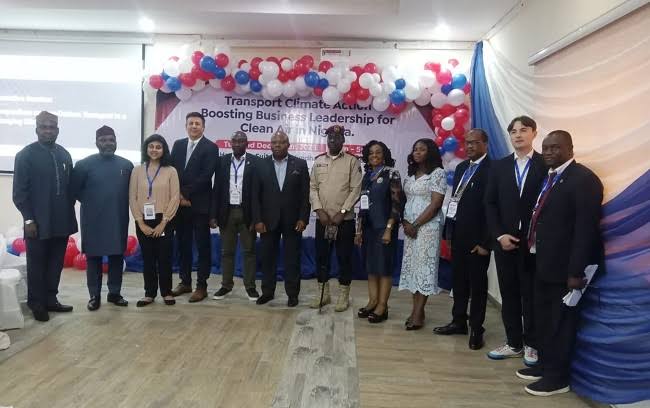
The United Kingdom Partnering for Accelerated Climate Transitions (UK PACT) has launched a Climate and Clean Air Action Framework to support transport businesses in Nigeria in reducing greenhouse gas emissions, improving operational efficiency and accessing green finance for low-carbon investments.
The framework was unveiled during the closing webinar of the UK PACT Nigeria: Enhancing Private Sector Capacity for Climate and Clean Air Action in Nigeria’s Transport Sector project, which has engaged more than 200 stakeholders nationwide. The initiative is scheduled for its official launch in August.
Funded by the UK Foreign, Commonwealth and Development Office (FCDO) through the UK PACT program, the project was implemented by a consortium comprising the University of York, Stockholm Environment Institute (SEI), AP3 Advisory, Escher Silverman Global (ESG), SLOCAT Partnership, and Consulting Engineers Group (CEG).
Developed through extensive stakeholder consultations and technical workshops held in Abuja and Enugu, the framework provides transport operators with a practical six-step roadmap for measuring greenhouse gas emissions, developing climate action plans, preparing investment-ready projects and improving access to climate finance.
Speaking during the webinar, Gary Haq of the Stockholm Environment Institute and the University of York emphasised that greater private-sector participation is essential to decarbonising Nigeria’s transport sector.
He noted that government policies and public funding alone are insufficient to achieve the country’s climate objectives, stressing that transport operators are well placed to drive emissions reductions because they own and manage vehicle fleets and make critical operational decisions.
Chief Executive Officer of AP3 Advisory, Dr. Gori Olusina Daniel, said the framework is intended to help businesses move beyond recognising the risks of climate change to implementing practical solutions.
“The question is no longer whether businesses should respond to climate change. The question is how they transition and how they finance that transition. This framework provides that practical pathway,” he said.
Also speaking at the event, Genevieve Ankunda of the SLOCAT Partnership highlighted the importance of emissions measurement, noting that organisations cannot effectively manage what they do not measure.
Meanwhile, Dr. Jubril Adeojo of AP3 Advisory urged transport businesses seeking climate finance to develop credible, investment-ready projects backed by measurable emissions reductions and sound financial analysis.
According to him, climate finance is awarded to well-prepared and bankable projects rather than intentions alone, making strong project preparation essential for businesses seeking funding.
In addition to the framework, the project produced several practical resources, including an Integrated Climate and Clean Air Action Framework, an Emission Reduction Guide, a Climate Action Plan Template, and guidance for developing climate-aligned transport projects.
The organisers said these resources will help transport businesses reduce emissions, improve operational performance, unlock climate financing opportunities and support Nigeria’s commitments under the Paris Agreement while advancing the country’s transition to a more sustainable and low-carbon transport sector.

Leave a Reply