

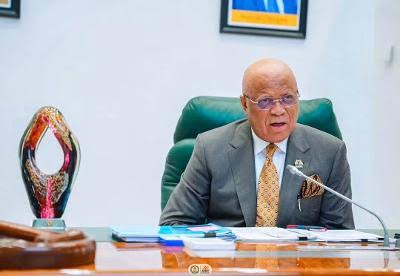
The Akwa Ibom State Executive Council has approved the release of ₦31 billion for a statewide economic empowerment program that will benefit 165,912 residents across the state’s 31 local government areas.
Funded under the 2026 Appropriation Law, with ₦1 billion allocated to each local government area, the initiative is designed to promote entrepreneurship, create jobs and reduce poverty through targeted support for youths, women, traders, farmers, transport operators and small and medium-sized enterprises (SMEs).
The empowerment program will include skills acquisition and vocational training for young people, the distribution of business starter packs, support for women’s cooperatives, grants for traders, agricultural inputs for farmers, SME development initiatives and a transport empowerment scheme.
To ensure effective implementation, Governor Umo Eno has constituted a committee, chaired by the Secretary to the State Government, to develop the framework for beneficiary selection and fund distribution before presenting its recommendations to the Executive Council.
Beyond economic empowerment, the council also approved a series of initiatives aimed at strengthening healthcare delivery across the state.
Briefing journalists after the meeting, the Commissioner for Health, Dr. Ekem Emmanuel, disclosed that the government has recruited 2,854 health workers, completed 29 model primary healthcare centres, commenced the upgrade of 17 additional primary healthcare facilities, and rehabilitated four secondary healthcare centres to improve access to quality healthcare services.
Governor Eno also directed the immediate recruitment of additional medical doctors to address workforce shortages in the state’s health sector.
Dr. Emmanuel further revealed that the government has procured three CT scan machines, with three more expected, alongside two Magnetic Resonance Imaging (MRI) machines to enhance diagnostic services.
He added that the ongoing digitisation of healthcare services is expected to improve operational efficiency, expand access to medical care and strengthen service delivery across the state.
As part of broader health sector reforms, the Executive Council approved the transmission of nine health-related bills to the Akwa Ibom State House of Assembly.
The proposed legislation covers public health security, healthcare standards and accreditation, health insurance, medical residency training, primary healthcare development, drug and medical supplies management, nursing education, health sciences and technology, as well as the establishment of the Akwa Ibom State University Teaching Hospital.
The council was also informed that the 12 executive bills previously forwarded to the State House of Assembly have been passed.
Governor Eno subsequently directed that the Speaker and leadership of the Assembly be invited to a special Executive Council meeting for the formal signing of the bills into law.
In addition, the governor approved the phased implementation of a solar-powered rural water supply program across the state’s 369 wards to improve access to clean and safe drinking water in underserved communities.
He instructed the Ministry of Water Resources and Sanitation to prepare a comprehensive proposal covering procurement, cost evaluation and implementation for further government consideration.

Leave a Reply