


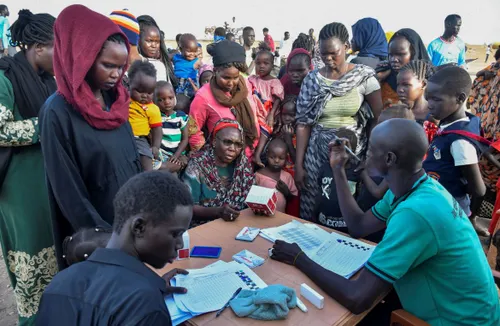
Sudan’s humanitarian emergency, already the largest in the world, is worsening on every front, the UN Office for the Coordination of Humanitarian Affairs warned on 10 August.
Some 33.7 million people now require humanitarian assistance in 2026, the highest figure of any country and an increase of 3.3 million on last year. The immediate driver is renewed violence. Fighting in West Darfur has displaced roughly 18,000 people from more than 20 villages in the past week alone, with most families fleeing across the border into Chad. In North Kordofan, Rapid Support Forces have encircled the state capital El Obeid, threatening a full assault as displaced civilians converge there seeking safety.
The conflict is now dismantling the very systems meant to keep people alive. Funding shortfalls recently forced the closure of three health facilities in Central Darfur, cutting off some 75,000 displaced people from essential care. Each closure pushes more of the burden onto an aid system that is running on empty.

The financing picture explains why. Sudan’s nearly $3 billion appeal for 2026 is just over 40 percent funded, with $1.2 billion received so far. That leaves aid agencies rationing what should be non-negotiable: food, clean water, trauma care. The shortfall is not unique to Sudan. Neighbouring Democratic Republic of Congo, battling its own conflict and a rapidly expanding Ebola outbreak in its eastern provinces, has seen its $2.5 billion response plan reach only 22 percent of its target.
Behind the numbers is a pattern humanitarian leaders have flagged repeatedly: needs are climbing while the money to meet them shrinks. Global humanitarian funding fell to roughly $12 billion in 2025, the lowest in a decade, even as displacement and hunger reached record highs. Sudan is where that gap turns fatal fastest, and where the world’s willingness to fund crises far from the headlines is being tested in real time.

Leave a Reply