

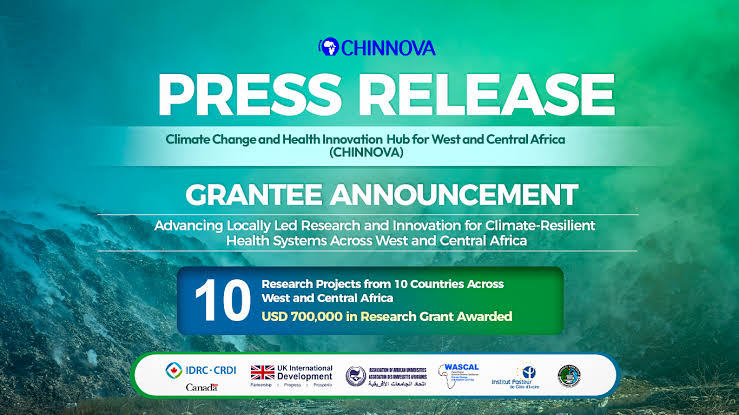
Ten research teams across West and Central Africa have secured a combined $700,000 to investigate climate-linked health risks and strengthen locally led evidence for policy and practice.
The Climate Change and Health Innovation Hub for West and Central Africa (CHINNOVA), led by the Association of African Universities, announced the awards on August 14. The selected institutions are based in Benin, Cameroon, Cote d’Ivoire, the Democratic Republic of the Congo, The Gambia, Gabon, Ghana, Liberia, Senegal and Sierra Leone.
The portfolio covers climate-sensitive disease surveillance, digital health, heat stress, gender equity and community resilience. CHINNOVA said more than 300 expressions of interest and over 200 full proposals were received, with an independent panel selecting the final projects.
Each award is intended to help African institutions produce evidence that can inform public policy and make health systems more responsive to climate shocks. The initiative is supported by Canada’s IDRC and the United Kingdom’s FCDO.
The development sits within a wider effort to make health systems in West & Central Africa more preventive, equitable and resilient. Across the continent, late diagnosis, uneven access to primary care, shortages of trained personnel and fragile referral systems frequently turn manageable conditions into more serious health and financial crises for families.
For decision-makers, the central issue is not simply whether a programme or policy carrying the label ‘CHINNOVA climate health research’ has been announced. The more important questions are who can use the service, whether frontline facilities have the staff and supplies to deliver it, how vulnerable groups are reached and whether reliable public data will show changes in access and outcomes.
For communities, success will be experienced at the point of service: a nearby facility that is open, affordable and adequately supplied; accurate information in a language people understand; respectful treatment; and a referral pathway that works when a case becomes complicated. Aggregate national or regional figures can conceal large gaps between urban and rural areas, income groups, genders and displaced populations.
A strong implementation model should publish disaggregated data while protecting patient privacy, involve frontline workers and community organisations, and provide a channel for users to report exclusion or poor-quality care. Those measures help establish whether an initiative is reducing barriers rather than merely increasing activity on paper.
Climate-related health threats are often researched with limited local data. Funding African teams across Francophone and Anglophone countries can improve the relevance of evidence, strengthen institutions and give vulnerable communities a larger role in shaping solutions.
What happens next will matter more than the announcement itself. Useful indicators include the release of implementation plans, budgets or court decisions; independent evidence of who benefits; and opportunities for affected communities to shape delivery and report problems.
Social Impact News will continue to treat official, organisational and advocacy claims as attributed statements unless they are supported by independent evidence. That distinction is particularly important where outcomes are contested, prospective or still dependent on funding and implementation.
Readers should also watch for the less visible effects that sit behind headline milestones. These include whether frontline organisations receive resources on time, whether women and young people participate in decisions, whether rural and marginalised communities can access benefits, and whether new systems remain affordable. Reporting on those questions over time will show whether the initiative produces durable change or only a short cycle of announcements and events.

Leave a Reply