

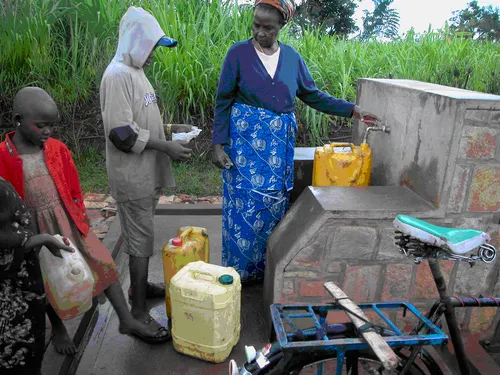
More than 1,000 leaders are expected in Kigali for a five-day African water and sanitation symposium focused on turning continental commitments into stronger public systems and investment.
The Africa Water & Sanitation Systems Leadership Symposium runs from August 17 to 21, hosted by Rwanda, co-convened by the African Ministers’ Council on Water and facilitated by IRC Africa. Its agenda covers leadership, regulation, professionalisation of service providers and strategic public finance.
The announcement was published as sponsored partner content from Rwanda’s Ministry of Infrastructure, so its claims about expected attendance and outcomes originate with the organisers. They say conclusions from Kigali will help inform Africa’s common position at the UN Water Conference in December 2026.
The meeting takes place during the African Union’s 2026 theme year on water and sanitation and links its work to SDG 6 and the Africa Water Vision 2063.
Across Pan-African / Rwanda, climate and environmental pressures increasingly intersect with health, livelihoods, infrastructure and inequality. Communities with the smallest financial cushion are usually least able to absorb crop losses, pollution, water interruptions, displacement or higher energy and food costs.
That makes implementation as important as ambition. Effective action around Africa water sanitation symposium requires transparent finance, credible institutions, local knowledge and meaningful community participation. Without those elements, well-publicised commitments can fail to reach people living closest to the problem.
For communities, success will be experienced at the point of service: a nearby facility that is open, affordable and adequately supplied; accurate information in a language people understand; respectful treatment; and a referral pathway that works when a case becomes complicated. Aggregate national or regional figures can conceal large gaps between urban and rural areas, income groups, genders and displaced populations.
A strong implementation model should publish disaggregated data while protecting patient privacy, involve frontline workers and community organisations, and provide a channel for users to report exclusion or poor-quality care. Those measures help establish whether an initiative is reducing barriers rather than merely increasing activity on paper.
Reliable water and sanitation require accountable institutions, skilled operators and predictable finance. Reforms in these areas can reduce disease, save time for women and girls and improve the resilience of schools, clinics and communities.
What happens next will matter more than the announcement itself. Useful indicators include the release of implementation plans, budgets or court decisions; independent evidence of who benefits; and opportunities for affected communities to shape delivery and report problems.
Social Impact News will continue to treat official, organisational and advocacy claims as attributed statements unless they are supported by independent evidence. That distinction is particularly important where outcomes are contested, prospective or still dependent on funding and implementation.
Readers should also watch for the less visible effects that sit behind headline milestones. These include whether frontline organisations receive resources on time, whether women and young people participate in decisions, whether rural and marginalised communities can access benefits, and whether new systems remain affordable. Reporting on those questions over time will show whether the initiative produces durable change or only a short cycle of announcements and events.

Leave a Reply