

A decade after coordinated international efforts pushed Somali piracy into decline, fresh attacks on commercial vessels are raising new concerns.
As piracy resurfaces off Somalia’s coast, the implications extend beyond the Horn of Africa, threatening global trade, energy security and the livelihoods of coastal communities.
Piracy resurfaces after more than a decade of decline
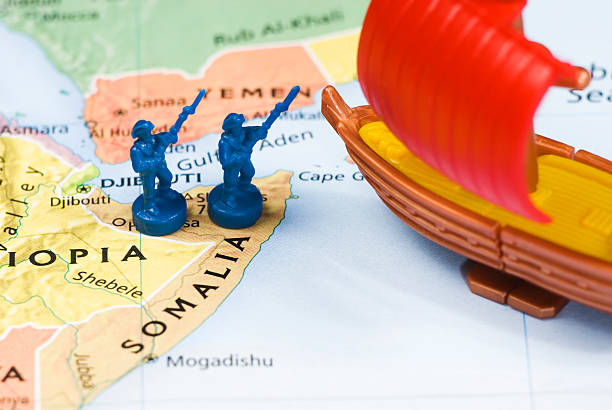
For more than a decade, Somali piracy appeared to have faded into history.
The dramatic hijackings that once dominated global headlines had become increasingly rare following coordinated international efforts to secure one of the world’s busiest shipping corridors.
Naval patrols from Europe, the United States, China, India and other countries, combined with tighter security measures by commercial shipping companies, helped suppress pirate activity and reduce attacks across the Gulf of Aden and the western Indian Ocean.
From 2011 onwards, armed guards became a common feature on vessels travelling through high-risk waters, while ships adopted new surveillance systems, physical barriers and emergency procedures. The combined approach resulted in a sharp decline in piracy incidents over the following 13 years.
Recent events, however, suggest the threat may be returning.
According to a BBC report, a series of vessel hijackings and attempted attacks off Somalia’s coast has renewed concerns among governments, shipping companies and maritime security agencies. Among the most notable incidents were the hijackings of the oil tankers Honour 25 and MT Eureka, both seized by armed groups operating in the Gulf of Aden.
Maritime security organisations have also reported increased pirate activity along Somalia’s northern coastline, raising concerns that the renewed attacks are not confined to a single criminal network or location.
The resurgence comes at a time of heightened geopolitical tensions in the Middle East. While the conflict between Iran and the United States appears to be easing following the signing of a 14-point interim peace deal, or Memorandum of Understanding, at the Palace of Versailles, stakeholders increasingly believe the wider regional security environment is creating opportunities for criminal groups to regain a foothold along Somalia’s coast.
Although piracy and geopolitical conflict are separate security challenges, their overlap has heightened concerns about the stability of one of the world’s most important maritime corridors.
Why the Gulf of Aden matters to the global economy

The waters surrounding Somalia are far more than a regional shipping route.
The Gulf of Aden, located between the Arabian Peninsula and the Horn of Africa, connects the Arabian Sea to the Red Sea through the Bab el-Mandeb Strait. Together, these waterways provide one of the shortest and most important maritime links between Europe, Asia, Africa and the Middle East.
Thousands of commercial vessels pass through the corridor every year, including oil tankers, container ships, bulk carriers and liquefied natural gas vessels transporting goods between major international markets.
For shipping companies, the route offers the shortest connection between Europe and Asia through the Suez Canal. Without it, vessels must travel around South Africa’s Cape of Good Hope, adding thousands of kilometres to their journeys.
The corridor also plays a significant role in global commerce.
Approximately 10 per cent of global trade passes through the Bab el-Mandeb Strait, while millions of barrels of oil and petroleum products move through the route every day. Any disruption can increase transportation costs and place upward pressure on energy prices.
The return of piracy therefore extends beyond the Horn of Africa, with potential implications for global trade, supply chains, insurance costs and consumer prices.
How Somali piracy emerged and why it declined
Somali piracy first became a major international concern in the early 2000s.
Following the collapse of Somalia’s central government in 1991, large sections of the country’s coastline were left without effective maritime governance. Foreign fishing fleets increasingly operated in Somali waters, often with little oversight.
Many Somali fishermen argued that industrial fishing vessels were depleting fish stocks and undermining local livelihoods. Some groups initially took on the role of informal coast guards, seeking to protect Somalia’s territorial waters.
Over time, those activities evolved into piracy and later developed into highly organised criminal enterprises.
By the late 2000s, pirate groups were using small, high-speed boats to intercept commercial vessels while deploying larger “mother ships” that allowed them to operate hundreds of kilometres from the Somali coastline.
Commercial vessels were hijacked, crews taken hostage and ransoms demanded from shipping companies and insurers. In some cases, ransom payments reached millions of dollars.
At the height of the crisis in 2011, more than 200 attacks were recorded, all believed to have been carried out by Somali pirates. According to World Bank estimates, piracy was costing the global economy billions of dollars every year through ransom payments, increased security costs, higher insurance premiums and disruptions to international shipping.
The international response soon intensified.
Naval forces from multiple countries established anti-piracy patrols across the Gulf of Aden and the western Indian Ocean. The European Union launched Operation Atalanta, while NATO and other multinational coalitions expanded their presence in the region.
Commercial shipping companies also strengthened onboard security by installing physical barriers, improving surveillance systems and introducing emergency procedures. Armed security teams became increasingly common on vessels travelling through high-risk waters.
By 2014, successful hijackings had fallen significantly, and for much of the following decade Somali piracy appeared to have been largely contained.
Fresh attacks raise fears of a resurgence
The recent hijackings have renewed concerns that pirate groups may once again be expanding their operations.
Although the number of attacks remains well below the levels recorded during the piracy crisis of the early 2010s, the pattern of recent incidents has alarmed maritime security agencies.
The hijacking of the Honour 25 in April 2026 marked one of the most significant attacks in recent years. The tanker was reportedly carrying approximately 18,500 barrels of oil destined for Mogadishu when it was seized by armed pirates.
Days later, reports emerged that MT Eureka had also been hijacked in the Gulf of Aden and redirected towards Somali waters.
Together with other reported seizures involving cargo vessels, the incidents have fuelled concerns that pirate networks are rebuilding their operational capacity after years of relative inactivity.
Why Somalia’s economic struggles continue to fuel piracy
The recent attacks have prompted fresh questions about why piracy is resurfacing after years of relative calm.
Although the number of incidents remains far below the levels seen at the height of the crisis, maritime security officials and analysts say changing security priorities across the wider region may be creating opportunities for criminal networks to regroup.
According to Al Jazeera, since 2023, naval forces operating in the Red Sea and Gulf of Aden have increasingly focused on responding to emerging threats linked to regional conflicts.
Protecting commercial vessels from missile attacks, drone strikes and other security threats has required significant resources, reducing attention on anti-piracy operations. While naval patrols have continued, some analysts believe pirate groups are taking advantage of gaps in maritime enforcement.
Piracy does not require the complete absence of security forces. Criminal groups only need to believe the risk of interception has fallen enough to make renewed operations worthwhile. Recent attacks suggest some pirate networks have reached that conclusion.
Puntland remains at the centre of renewed pirate activity
Much of the recent pirate activity has been concentrated in Puntland, Somalia’s semi-autonomous northeastern region.
The area has long been associated with piracy because of its extensive coastline, proximity to major international shipping routes and limited government presence in remote coastal communities.
Several locations linked to recent incidents, including Qandala and Caluula, have featured prominently in previous piracy operations. Hundreds of kilometres of coastline are dotted with small fishing communities, making it difficult to monitor every inlet, beach and harbour.
Local authorities have taken steps to strengthen maritime security, particularly through the Puntland Maritime Police Force, which has played an important role in disrupting pirate networks over the years.
Despite those efforts, economic opportunities remain limited in many coastal communities. Infrastructure is underdeveloped and government resources continue to be stretched across multiple security priorities, leaving criminal groups with areas where they can continue operating.
Piracy begins on land before it reaches the sea
The resurgence of piracy is rooted in conditions on land as much as events at sea.
Despite political progress in recent years, Somalia remains one of the world’s poorest countries. Many communities continue to face poverty, unemployment and limited economic opportunities, creating conditions that make recruitment into pirate networks easier.
For many young people living in remote coastal areas, the financial rewards from a successful hijacking can far exceed the income available through legitimate employment.
Illegal, unreported and unregulated fishing also remains a major concern along Somalia’s coastline, which stretches more than 3,300 kilometres.
Research organisations estimate that Somalia loses hundreds of millions of dollars each year because of illegal fishing. Many local fishermen view this as evidence that foreign vessels profit from Somali waters while coastal communities remain impoverished.
Although some have used illegal fishing to justify piracy, modern pirate groups are organised criminal enterprises driven primarily by financial gain. Even so, the economic frustrations associated with illegal fishing continue to make recruitment easier.
Somalia’s federal government has continued rebuilding state institutions, but the ongoing fight against al-Shabaab consumes significant security resources, while maritime enforcement capacity remains limited.
Pirate networks continue to adapt
While the basic objective of piracy has not changed, the methods used by criminal groups have evolved.
Modern pirate networks increasingly rely on satellite communications, GPS technology and improved intelligence gathering to monitor vessel movements.
Some groups continue to deploy “mother ships”, enabling them to launch attacks hundreds of kilometres from the Somali coast and expand the number of potential targets.
Recent incidents also suggest pirate groups are operating through smaller and more flexible networks that assemble for specific operations rather than maintaining large permanent structures, making them harder for authorities to disrupt.
At the same time, commercial shipping companies have strengthened onboard security.
Many vessels travelling through high-risk waters now follow strict security procedures, maintain close contact with maritime security agencies and implement best management practices designed to discourage attacks.
The result is an ongoing contest between increasingly adaptable criminal networks and evolving maritime security measures.
The human and economic cost of piracy
Beyond the financial impact, piracy carries significant human consequences.
When vessels are hijacked, crew members become hostages, sometimes spending weeks or months in captivity while negotiations take place. The uncertainty, isolation and psychological stress can have lasting effects.
Many seafarers come from developing countries where maritime employment supports entire families. Extended hostage situations can therefore create both emotional and financial hardship long after crews return home.
The economic consequences also extend well beyond Somalia.
Oil tankers remain attractive targets because of the high value of both the vessels and their cargo, strengthening pirates’ bargaining position during ransom negotiations.
Rescuing hijacked tankers also presents complex challenges for military forces because of the risks associated with flammable cargo.
The seizure of vessels such as Honour 25 and MT Eureka illustrates why oil tankers continue to attract pirate attention despite tighter security measures.
For shipping companies, operating in high-risk waters often means higher insurance premiums, additional security costs or longer alternative routes designed to reduce exposure.
Those costs eventually filter through global supply chains, increasing transportation expenses and placing upward pressure on consumer prices. Energy markets, which remain sensitive to disruptions along the Gulf of Aden and Red Sea, can also be affected by renewed maritime insecurity.
Containing piracy will require action beyond naval patrols
The decline in piracy after 2011 demonstrated that coordinated international action can contain the threat.
However, sustaining those gains requires continued attention.
While naval patrols remain an essential part of maritime security, the long-term solution extends beyond military operations.
Strengthening governance, expanding economic opportunities, improving coastal security and supporting legitimate maritime industries remain central to reducing the conditions that allow piracy to flourish.
Addressing illegal fishing could also help protect Somalia’s maritime resources while easing some of the economic grievances affecting coastal communities.
Ultimately, piracy reflects broader challenges linked to governance, economic development and security.
Unless those underlying issues are addressed, criminal networks are likely to continue finding opportunities to re-establish themselves along one of the world’s most strategically important maritime corridors.

Leave a Reply