

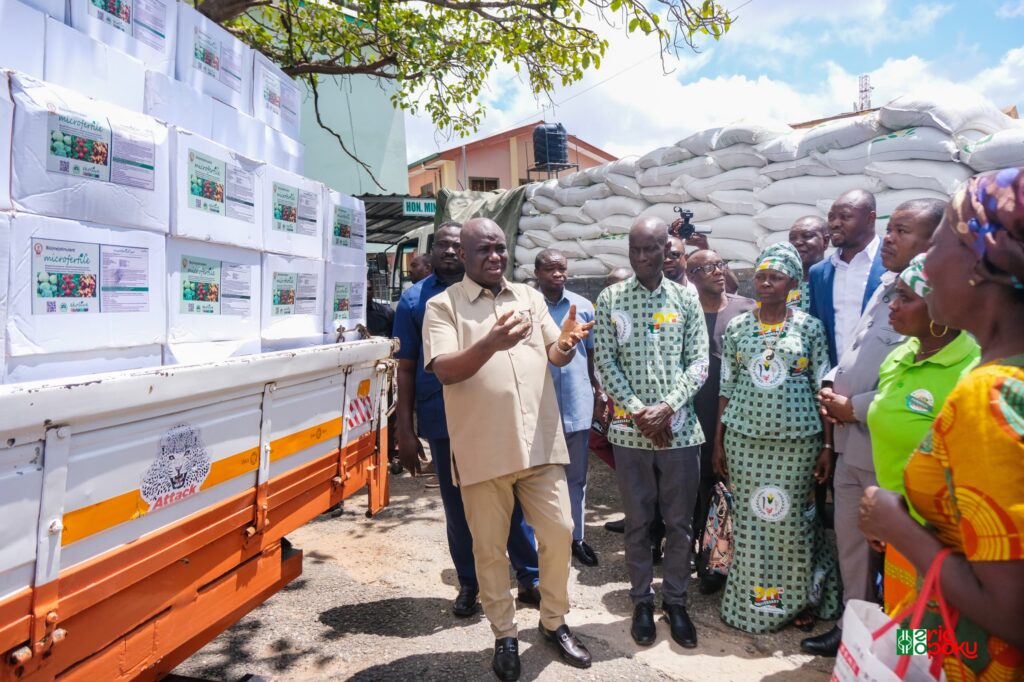
The Ministry of Food and Agriculture (MoFA) has dismissed concerns over alleged delays in the distribution of farm inputs for the 2026 farming season, stating that supplies are being delivered in line with the country’s crop production calendar to maximise their effectiveness.
In a statement, the Ministry explained that distributing agricultural inputs too early could result in improper storage, misuse, diversion or application outside the recommended farming period, reducing their impact on crop yields.
According to the Ministry, the major farming season in northern Ghana begins in May, while fertiliser application is typically carried out between late June and the end of July. It said farm inputs for the northern sector were therefore distributed within the appropriate application window.
For southern Ghana, the Ministry noted that attention has now shifted to preparations for the minor farming season, which starts in August. Distribution of farm inputs to targeted farming communities is currently underway to support crop production during the season.
As part of its intervention measures, the Ministry disclosed that 40,000 bags of inorganic fertiliser have been allocated to the Peasant Farmers Association of Ghana (PFAG) for distribution to vulnerable farmers who may not have benefited from allocations made through the Metropolitan, Municipal and District Assemblies (MMDAs).
The support programme also covers selected irrigation schemes, where farm inputs have been supplied to sustain agricultural production during the lean season.
In addition, vegetable farmers—particularly tomato producers in designated production areas—have received seeds and organic fertilisers to improve yields. Farmers engaged in irrigated agriculture are also expected to benefit from further assistance under the government’s dry-season farming initiative.
The Ministry said the interventions are specifically targeted at vulnerable farmers to help cushion them against rising production costs, increase agricultural output and strengthen national food security.
It added that extension officers are closely monitoring the distribution process and the utilisation of the inputs to ensure they reach the intended beneficiaries and are used effectively.
Looking ahead, the Ministry expressed optimism about the 2026 farming season, citing favourable rainfall conditions and ongoing government interventions. It projected that agricultural production could surpass this year’s targets as efforts continue to transform agriculture from a subsistence activity into a more productive, competitive and commercially viable sector.

Leave a Reply