


Agriculture has long been the backbone of Ghana’s economy, providing employment for millions of people and contributing significantly to the country’s food supply and economic growth. From cocoa farms in the forest zones to maize, rice, yam, and vegetable farms across the country, agriculture supports livelihoods and sustains communities. However, climate change is increasingly threatening this vital sector, leaving farmers to grapple with unpredictable weather, declining yields, and growing uncertainty.
Agriculture remains one of Ghana’s most important economic sectors, employing about 40 percent of the country’s labour force and contributing roughly 20 percent of Ghana’s Gross Domestic Product (GDP). The sector also accounts for more than 40 percent of the country’s export earnings, largely driven by cocoa production. However, because most farming is rain-fed, agriculture has become one of the sectors most vulnerable to climate change.
One of the most visible effects of climate change on agriculture is the unpredictability of rainfall. Traditionally, farmers relied on fairly consistent rainy seasons to prepare their land and plant crops. Today, those seasonal patterns are becoming increasingly unreliable. Rains may arrive weeks later than expected, stop abruptly, or fall in intense bursts that flood farmlands instead of nourishing them. This uncertainty makes farming a risky venture, especially for smallholder farmers who depend almost entirely on rain-fed agriculture. The vulnerability is made worse by Ghana’s dependence on rainfall. According to climate and agricultural assessments, nearly 80 percent of farms in Ghana rely on rain-fed agriculture, while only about 2 percent of the country’s irrigation potential has been developed. This means that even small changes in rainfall patterns can have significant consequences for food production and farmers’ incomes.
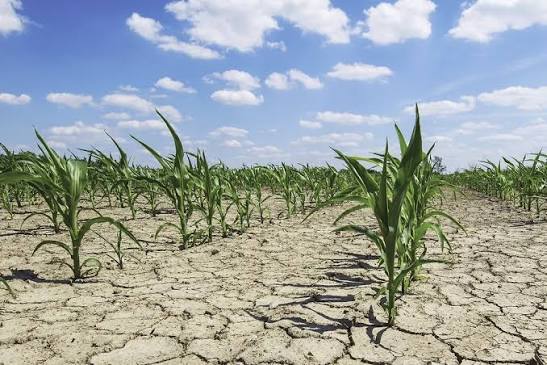
Northern Ghana has experienced increasingly prolonged dry spells in recent years, reducing soil moisture and affecting staple crops such as maize, millet, sorghum, and groundnuts. Climate projections indicate that maize yields could decline by about 7 percent by 2050, while cassava yields could fall by as much as 30 percent by 2080 if adaptation measures are not strengthened. While drought threatens some regions, flooding has become an equally destructive problem in others. Heavy rainfall events are becoming more frequent and intense, washing away crops, eroding fertile topsoil, and destroying irrigation systems. Recent floods in parts of the country, including the devastating flooding in Greater Accra, serve as a reminder that extreme weather events are becoming more common. Although urban flooding often dominates headlines, rural farming communities also suffer immense losses when rivers overflow and farmlands are submerged.

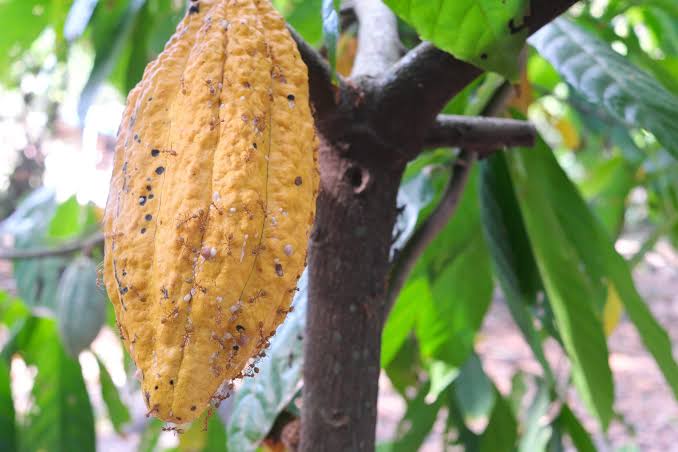
Ghana is the world’s second-largest cocoa producer, and cocoa remains one of the country’s most valuable export commodities. However, climate change is placing increasing pressure on cocoa production. Rising temperatures, changing rainfall patterns, prolonged dry seasons, and the spread of fungal diseases such as black pod disease are reducing yields in several cocoa-growing communities. Experts warn that suitable land for cocoa cultivation could shrink in the coming decades if global temperatures continue to rise. Recent seasons have already seen production decline because of adverse weather conditions, climate-related diseases, and environmental degradation.
Climate change is also contributing to the spread of crop pests and diseases. Warmer temperatures create favourable conditions for insects and plant diseases that can damage crops and reduce yields. Farmers are increasingly reporting infestations that were once uncommon, forcing them to spend more on pest control while still facing reduced harvests.
The impact extends beyond farms. Lower agricultural production affects food availability and contributes to rising food prices across the country. When staple crops become scarce, households spend more on food, placing additional financial pressure on families already struggling with the rising cost of living. Food insecurity also increases the risk of malnutrition, particularly among children and vulnerable populations.
Despite these challenges, farmers, researchers, and agricultural institutions are working to build resilience. Climate-smart agriculture is gaining attention as an effective approach to adapting to changing weather conditions. Farmers are adopting drought-tolerant crop varieties, practising conservation agriculture, diversifying crops, and using improved irrigation systems to reduce their dependence on unpredictable rainfall.
Technology is also playing an increasingly important role in Ghana’s agricultural transformation. Mobile applications now provide weather forecasts, market information, and farming advice, helping farmers make better decisions about planting and harvesting. Drone technology is being used to monitor crop health, while satellite data helps agricultural experts predict weather patterns and identify areas at risk of drought or flooding.
Government agencies, development partners, and non-governmental organisations are supporting farmers through training programmes, improved access to climate information, and investments in irrigation infrastructure. These initiatives are helping communities adapt while promoting more sustainable farming practices.
Protecting Ghana’s agriculture also requires stronger environmental conservation efforts. Deforestation, land degradation, and the destruction of wetlands reduce the country’s ability to withstand climate shocks. Planting trees, protecting water bodies, restoring degraded land, and promoting sustainable land management can strengthen ecosystems while supporting agricultural productivity.
Addressing climate change is not solely the responsibility of farmers. Governments, businesses, researchers, financial institutions, and consumers all have a role to play in building a resilient agricultural sector. Investments in agricultural research, climate-resilient infrastructure, rural financing, and sustainable policies will be essential to safeguarding Ghana’s food systems for future generations.
Climate change is reshaping agriculture in Ghana, but it is also encouraging innovation and resilience. Across the country, farmers are embracing new technologies, adopting sustainable farming methods, and finding creative ways to adapt to changing conditions. Their determination demonstrates that while the challenges are significant, they are not insurmountable.
The future of Ghana’s agriculture will depend on how effectively the nation responds to climate change today. By investing in climate-smart agriculture, protecting natural resources, and empowering farmers with the tools and knowledge they need, Ghana can strengthen its food security, protect rural livelihoods, and ensure that agriculture continues to drive economic growth for generations to come.

Leave a Reply