

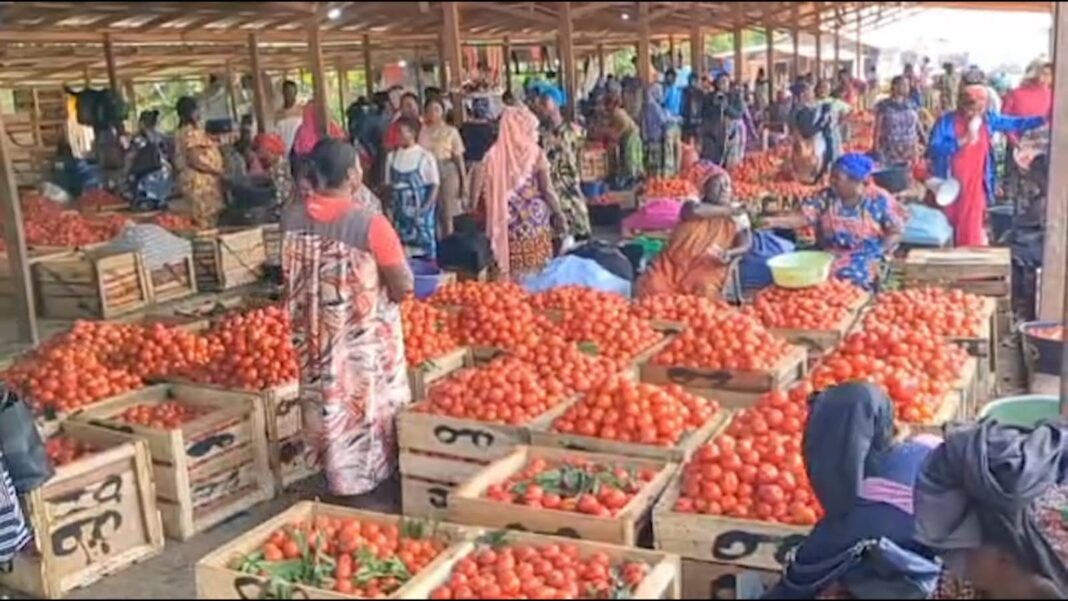
Tomato prices are expected to decline significantly in the coming weeks as local farmers begin bringing fresh harvests to the market, Deputy Minister for Food and Agriculture John Dumelo has said.
Mr Dumelo said the increased supply from the ongoing harvest would ease pressure on the domestic market and improve the availability of tomatoes across the country.
He also disclosed that the government is preparing to support large-scale dry-season tomato farming from December 2026 to June 2027 to address anticipated supply shortages.
According to him, land preparation has largely been completed in parts of northern Ghana, while seedling nursing and transplanting are expected to begin in October.
In a Facebook post on Monday, September 7, Mr Dumelo said the government had provided farmers with solar-powered boreholes and irrigation inputs to support dry-season cultivation.
“The prices of tomatoes should see a sharp decline in the coming weeks as Ghanaian farmers have started harvesting,” he said.
He added that the dry-season farming programme would help “augment the shortfalls” expected next year and contribute to more consistent tomato supplies throughout the year.
The initiative forms part of efforts to increase year-round tomato production and reduce the seasonal supply gaps that often trigger sharp price increases.
Tomatoes recorded the largest price increase among food items monitored by the Channel One Market Price Barometer in August 2026, reflecting growing pressure on consumers and traders.
Traders have attributed the recent price surge partly to reduced rainfall in major tomato-producing areas, which has affected supply.
Tomato trader Mary Okyere said prices had increased sharply compared with the same period last year.
“Last year, a basket of tomatoes like this sold for about GH¢200, but now the same basket costs as much as GH¢700,” she said.
She added that a paint rubber of tomatoes, which previously sold for around GH¢50, now costs approximately GH¢150.
While the government expects prices to ease as the current harvest reaches markets, traders remain concerned that inadequate rainfall could continue to affect production and supply.
The planned dry-season farming programme is therefore expected to play an important role in reducing seasonal shortages, improving food availability and helping stabilise tomato prices in the months ahead.

Leave a Reply