

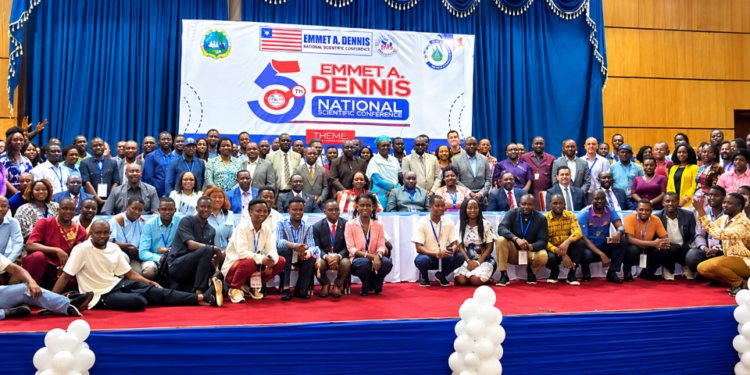
Liberia and Sierra Leone have called for stronger cross-border cooperation, joint scientific research and improved disease surveillance to strengthen public health security and improve preparedness for emerging health threats across West Africa.
The call was made during the fifth annual Emmet A. Dennis National Scientific Conference, organised by the National Public Health Institute of Liberia (NPHIL) in Monrovia from 14 to 16 October 2026. Held under the theme “Strengthening Health Security in Liberia Through Research and Innovation”, the conference brought together public health experts, government officials, researchers, academics and development partners to explore research-driven solutions to health challenges.
Liberian President Joseph Nyuma Boakai reaffirmed his administration’s commitment to strengthening the country’s public health system through scientific research, technological innovation and sustained investment in disease prevention. In a message delivered by his representative, he stressed the importance of investing in early detection and preparedness rather than waiting for health emergencies to occur before taking action.
The President also called for greater regional solidarity, coordinated disease surveillance and improved information-sharing systems, emphasising that infectious diseases can cross national borders and require a coordinated response.
Delivering the keynote address, Dr Foday Sahr, Executive Director of Sierra Leone’s National Public Health Agency, highlighted the close geographical, cultural and historical connections between the two countries. He explained that shared borders, population movements and longstanding social and economic relationships mean that public health threats affecting one country can have implications for the other.
Dr Sahr called for stronger collaboration between public health institutions in Liberia and Sierra Leone, recommending improved information-sharing arrangements, technical capacity development and joint research involving scientists from both countries.
He noted that coordinated research could help health authorities develop shared approaches to disease surveillance, scientific investigations and public health interventions. Such cooperation could also support the development of evidence-based policies and improve the region’s ability to identify and respond to emerging health threats.
Drawing on Sierra Leone’s experience following the Ebola outbreak, Dr Sahr highlighted the importance of sustained investment in research, innovation and community trust. He also identified disease surveillance systems, laboratory networks, workforce development and emergency preparedness as important components of a resilient public health system. <Cite refs={[“turn604523search3”]}/>
He urged governments and development partners to invest in the institutions, infrastructure and technical expertise needed to sustain health security, while encouraging health professionals to prioritise systematic planning and evidence-based decision-making.
NPHIL Interim Director-General Dr Sia Wata Camanor highlighted the conference’s contribution to scientific research, professional development and institutional capacity-building in Liberia. She said the gathering provides opportunities for emerging researchers to present their work, exchange knowledge and strengthen collaboration between academic institutions, health professionals and public health authorities.
Dr Camanor stressed that scientific conferences should produce practical recommendations capable of informing national health policies and improving public health services. According to the conference organisers, the discussions and research presentations were expected to inform a post-conference resolution for consideration by the Liberian government.
The conference also served as a platform for researchers and public health professionals to examine common challenges, share scientific findings and explore innovative approaches to disease prevention, epidemiological surveillance and emergency response.
For Liberia and Sierra Leone, stronger collaboration could improve the early detection of infectious diseases, strengthen responses to outbreaks and support the exchange of technical expertise across borders. These efforts are particularly important in a region where cross-border movement and interconnected communities can complicate disease prevention and control.
The discussions reinforce the importance of investing in scientific research, strengthening public health institutions and building regional partnerships to protect communities from emerging health threats.
As both countries continue to develop their public health systems, translating research findings into practical policies and sustained investment will be essential to improving preparedness, protecting vulnerable populations and strengthening health security across West Africa.

Leave a Reply