

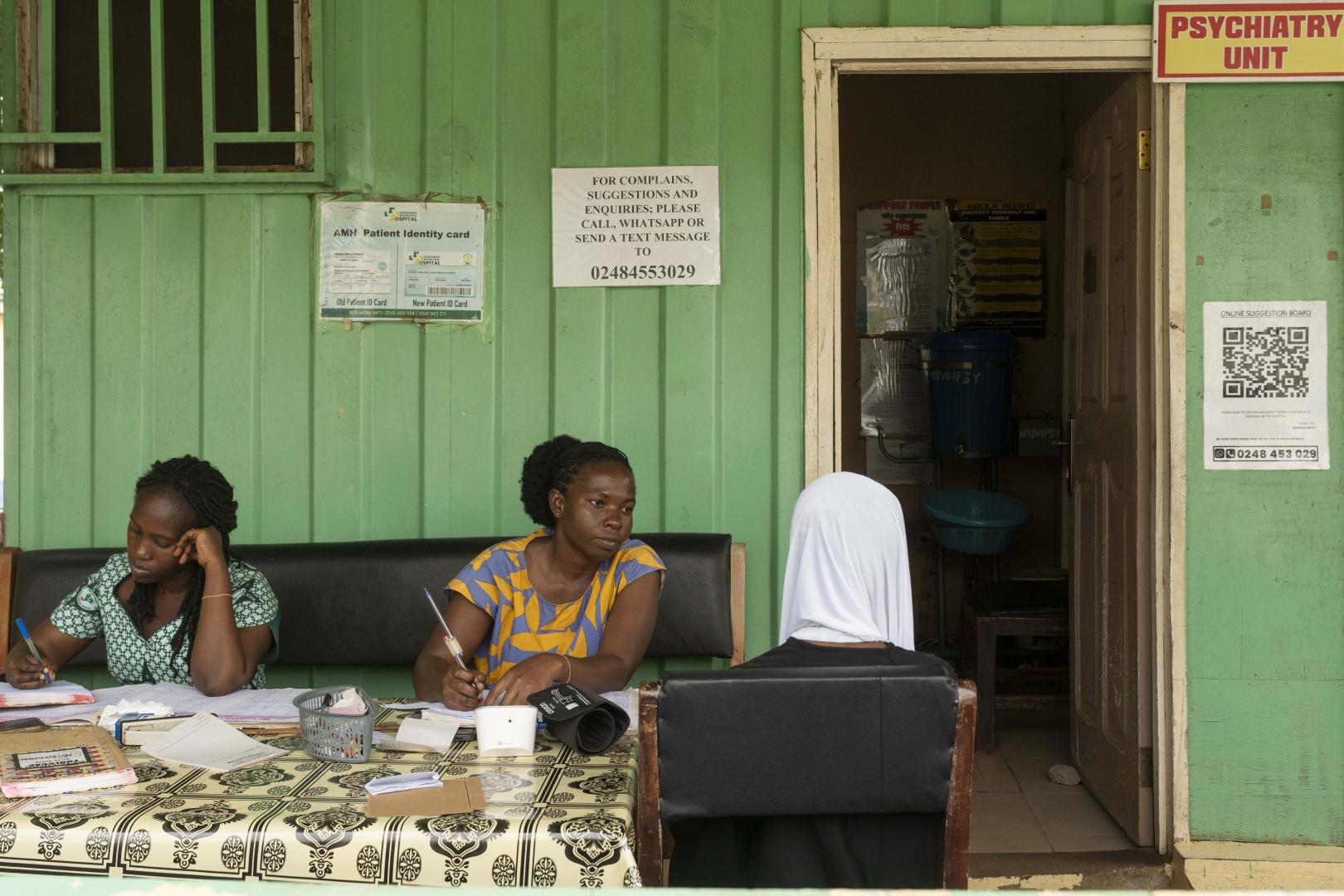
Ghana has taken a significant step towards improving maternal healthcare with the launch of its Maternal Mental Health Policy in 2026, aimed at strengthening the identification, treatment and support of women experiencing mental health challenges during pregnancy and after childbirth.
The policy follows growing recognition of gaps in maternal mental health services, including limited screening, inadequate training for healthcare workers and difficulties accessing appropriate care. Supported by the World Health Organization (WHO), the initiative seeks to integrate mental health services into routine maternal and child healthcare across the country.
For Emelia Agblevor, who has lived with bipolar disorder and postpartum depression, the policy represents an important opportunity to address a gap she experienced during her own pregnancy and after childbirth.
Diagnosed with bipolar disorder in 2013, Emelia understood the importance of mental health support. However, despite attending antenatal and postnatal care, her mental wellbeing was never assessed by healthcare professionals.
She relied on a psychiatrist who was also a friend and a psychologist who regularly checked on her for support during this period.
“If I wasn’t privileged enough to have a psychiatrist who was also a friend and checking up on me, I don’t know how things would have ended up for me”, she said.
Her experience highlights the challenges faced by women whose mental health needs may go unnoticed during pregnancy and after delivery, particularly when routine screening and professional support are unavailable.
Pregnancy and the period following childbirth can expose women to several emotional and psychological challenges, including depression, anxiety and other mental health conditions. When these concerns are not identified early, women may struggle without receiving the care and support necessary for their wellbeing.
A situational analysis of maternal mental health services in Ghana identified significant gaps in healthcare workers’ knowledge and capacity to respond to these conditions. According to the findings, as many as 70% of health workers surveyed were unfamiliar with maternal mental health disorders, while many lacked the skills to screen, diagnose and provide appropriate interventions.
These findings underscored the need for a coordinated national response that addresses both the availability of mental health services and the capacity of healthcare professionals to identify and support women experiencing psychological distress.
WHO Supports Ghana to Strengthen Maternal Mental Health Services
Ghana is among the countries benefiting from the WHO Director-General’s Special Initiative for Mental Health, which aims to expand access to quality mental healthcare for an additional 100 million people globally. In Ghana, the initiative seeks to extend access to quality mental health services to an additional 5.2 million people.
Through the initiative, WHO has supported the country in strengthening mental health governance, training healthcare workers, expanding services and integrating mental health into primary healthcare.
As the initiative progressed, maternal mental health emerged as an area requiring more targeted attention.
WHO supported a comprehensive situational analysis to examine existing maternal mental health services and identify gaps in screening, early detection, treatment and referral. The findings provided an evidence base for developing a dedicated national policy to improve care for women during pregnancy and after childbirth.
The process also highlighted the importance of equipping healthcare workers with the knowledge, practical skills and confidence needed to identify mental health concerns and connect women to appropriate services.
Training Healthcare Workers to Identify Mental Health Challenges
WHO-supported training has helped strengthen healthcare workers’ understanding of maternal mental health and improve how they engage women during antenatal care.
Mental health discussions can be difficult for some women because of stigma and fear of being labelled. Training has therefore encouraged healthcare workers to approach these conversations with sensitivity, using supportive language that allows women to discuss their emotional wellbeing more comfortably.
For Judith, a midwife at the Ashaiman Municipal Assembly, the training offers an opportunity to improve maternal healthcare delivery and strengthen support for women in clinical settings.
“I would love to thank WHO for the training. This is an opportunity given to me’. It will not be just for a one-time thing. It will be expanded so that more midwives will be trained so that it will help ease the work on the field”, she said.
Expanding such training could help more midwives and other healthcare professionals recognise early warning signs, conduct appropriate assessments and refer women for further care when necessary.
Ghana’s Maternal Mental Health Policy Sets Direction for Care
The launch of Ghana’s Maternal Mental Health Policy in 2026 marks an important development in efforts to make mental healthcare an integral part of maternal and child health services.
The policy provides a framework for strengthening early identification, referral systems, healthcare worker capacity and access to appropriate treatment and support.
Recommendations arising from the work have also been shared with academic and professional institutions, including the Nursing and Midwifery Council. Efforts to incorporate maternal mental health into the training of nurses and midwives are intended to strengthen the knowledge and skills of current and future healthcare professionals.
For Dr Agblevor, the launch of the policy represents the realisation of an objective that once appeared distant.
“I was quite surprised because for me this is seeing something that I thought was a bit far to reach become reality. I think that if this is institutionalized now that the policy has been launched, if it’s implemented, if it’s institutionalized, it would really go a long way to improve the well-being of mothers”, she said.
She believes that effective implementation and institutionalisation of the policy could significantly improve maternal wellbeing and ensure that women receive appropriate support throughout pregnancy and after childbirth.
Dr Fiona Braka, WHO Representative in Ghana, also emphasised the importance of addressing both the physical and mental health needs of women during maternal care.
“Every woman deserves maternal care that recognises both her physical and mental wellbeing. By integrating mental health into routine maternal services and equipping health workers with the skills to identify and respond to concerns, Ghana can help ensure that mothers receive the support they need when they need it”.
Implementation Will Determine the Policy’s Impact
While the launch of the policy represents progress, its long-term impact will depend on how effectively it is implemented in health facilities, how widely healthcare workers are trained and whether women can access timely and appropriate support.
For Dr Agblevor, success will mean ensuring that mothers no longer have to depend on personal relationships or exceptional circumstances to have their mental health needs recognised.
Her experience demonstrates why maternal mental health must become a routine component of healthcare rather than an issue addressed only when symptoms become severe.
Ghana’s Maternal Mental Health Policy offers an opportunity to close existing gaps, strengthen early intervention and improve the quality of care available to mothers across the country.
Ultimately, every woman should be able to access maternal healthcare that recognises her emotional and psychological wellbeing alongside her physical health. No mother should have to depend on luck to have her mental health seen, heard and supported.

Leave a Reply