

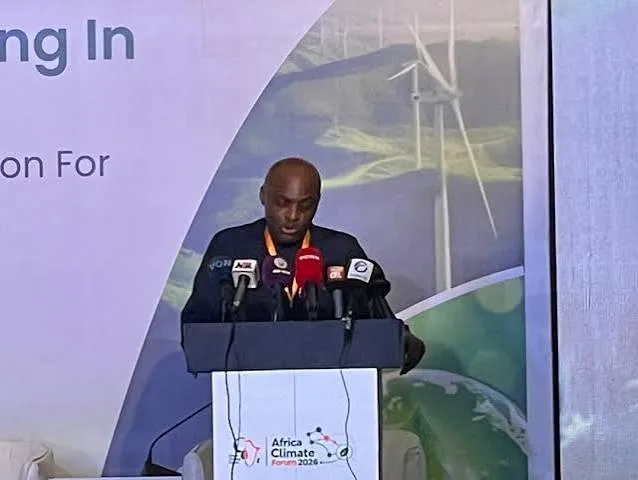
Africa must move beyond climate commitments and translate them into tangible results through stronger collaboration among governments, private investors and development institutions, the Convener of the Africa Climate Forum, George Nwangwu, has said.
Nwangwu made the call in his welcome address at the fourth edition of the Africa Climate Forum, held in Abuja on Tuesday, highlighting the need for coordinated efforts to address the continent’s growing climate challenges.
He noted that Africa continued to face flooding, drought, food insecurity and environmental degradation despite commitments to tackle climate change.
He also emphasised the media’s role in advancing climate action, urging journalists to tell stories that highlight the effects of climate change on livelihoods, as well as the resilience and innovations of African communities.
According to Nwangwu, climate reporting should go beyond statistics to reflect the lived experiences of farmers affected by flooding, families facing drought and young entrepreneurs developing solutions to environmental challenges.
He stressed that Africa should not be viewed merely as a recipient of climate solutions developed elsewhere, but also as a source of knowledge, creativity and innovation.
“We are also a source of knowledge, creativity and innovation. Our entrepreneurs understand the realities of our markets and communities,” he said.
Similarly, the Founder and Executive Chair of Avocado Holdings, Dr Oge Modie, called for stronger public-private collaboration to translate Africa’s climate commitments into measurable development outcomes.
Modie, who was represented by Mrs Chioma Ikenna-Ibeh, Head of Business at Radah Media Company, said climate action should extend beyond environmental protection to address reliable energy, food security, resilient infrastructure, economic opportunities and improved community well-being.
She explained that governments must establish clear policies, businesses mobilise investment and innovation, and development partners provide access to finance and expertise. Communities, she added, must participate meaningfully in the design and implementation of climate interventions.
Modie noted that effective collaboration required shared priorities, clearly defined responsibilities and accountability, warning that bringing stakeholders together without coordinated implementation could undermine expected results.
She also highlighted the importance of strategic communication, noting that public understanding, institutional trust and stakeholder engagement were essential to securing acceptance of climate policies and translating them into practical outcomes.
According to her, communication should be integrated into policy implementation from the outset to connect government decisions with community needs and encourage meaningful public participation.
“Communication is not merely how we report progress. It is one of the ways we make progress possible,” she said, urging stakeholders to prioritise transparent engagement.
Modie urged participants at the two-day forum to focus on implementation, assigned responsibilities and measurable outcomes rather than limiting discussions to identifying challenges and proposing solutions.
She maintained that Africa had the ambition, ideas and expertise needed to tackle its climate challenges but must strengthen coordination, sustain partnerships and align efforts to achieve tangible results.
The discussions highlight the importance of bridging the gap between climate commitments and practical implementation, with stronger partnerships, sustainable investment and effective communication identified as critical to building climate resilience and supporting communities across Africa.

Leave a Reply