

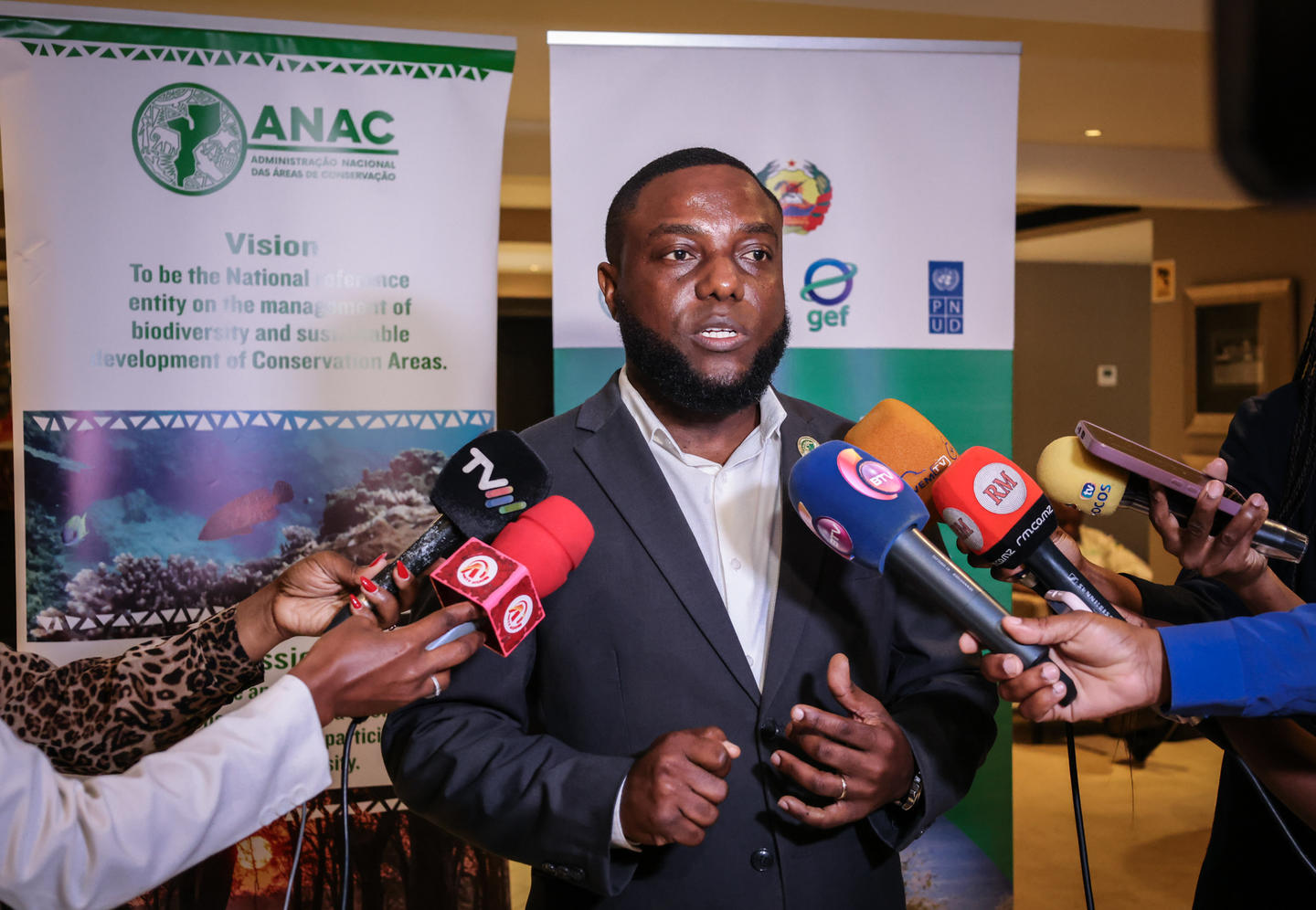
The Government of Mozambique, through the National Administration for Conservation Areas (ANAC), and the United Nations Development Programme (UNDP) have launched a new initiative aimed at strengthening wildlife conservation, improving community livelihoods and building resilience across key biodiversity landscapes in the country.
Known as TRANSFORM, the project was officially launched in Maputo on 2 September 2026 and will run until 2033. It is supported by approximately US$15.4 million from the Global Environment Facility (GEF) under its GEF-8 Integrated Programme on Wildlife Conservation for Development.
The initiative will focus on the Gorongosa–Marromeu and Rovuma–Lugenda landscapes, areas considered strategically important for Mozambique’s biodiversity and ecological connectivity.
TRANSFORM seeks to change how wildlife conservation is planned, financed and implemented by adopting an integrated, landscape-scale approach that connects environmental protection with local economic development.
The project recognises that conservation is closely linked to the social and economic conditions of communities living in and around protected areas. It will therefore combine stronger conservation management with improved livelihoods, better law enforcement, inclusive land-use planning and mechanisms to ensure communities benefit more equitably from wildlife-based economies.
Tackling threats to biodiversity
The two landscapes face several environmental pressures, including deforestation, poaching, habitat loss and fragmentation, unsustainable land-use practices and human-wildlife conflict.
TRANSFORM aims to address these challenges together rather than treating conservation and community development as separate priorities.
The project is expected to support the reduction of poaching and wildlife trafficking, while helping to conserve and restore ecological corridors and improve the management of more than three million hectares of terrestrial landscapes with significant biodiversity value.
The initiative will also support the protection of ecosystem services that communities and local economies depend on. According to UNDP, conserving and restoring these ecosystems could help avoid significant carbon dioxide emissions and strengthen the contribution of nature conservation to climate action.
Communities at the centre of conservation
A major component of TRANSFORM is strengthening the connection between conservation and community livelihoods.
UNDP Deputy Resident Representative for Programmes, Cleophas Torori, said lasting conservation requires both strong institutions and communities that see tangible benefits from protecting natural resources.
The project will therefore create opportunities for communities to participate in conservation-related economic activities and benefit from resources generated across the targeted landscapes.
Women and young people will also be prioritised in the initiative, with efforts to expand their access to economic opportunities, financing and participation in conservation activities.
Five areas of intervention
TRANSFORM will be implemented through five interconnected components.
The first focuses on strengthening the management, connectivity and sustainability of conservation area networks.
The second will support policy and regulatory frameworks that create stronger institutional and governance conditions for biodiversity conservation.
The third focuses on generating socio-economic benefits through wildlife management, including sustainable livelihoods and fairer benefit-sharing mechanisms.
The fourth will promote knowledge exchange and coordination among institutions and stakeholders, while the fifth will establish monitoring and evaluation systems to measure progress, results and impact.
Conservation and climate resilience
The project also comes amid increasing climate-related risks in Mozambique.
ANAC Director-General Pejul Calenga highlighted the importance of maintaining healthy ecosystems as a form of natural protection against climate-related hazards. He cited government contingency planning for the 2025/2026 rainy and cyclone season, which identified a potential risk scenario affecting up to 2.7 million people.
TRANSFORM is expected to strengthen ecosystem resilience and the ability of local communities to adapt to climate change between 2026 and 2033.
The initiative will promote nature-based solutions and sustainable natural resource management while linking biodiversity conservation with local development, gender inclusion, youth participation and climate resilience.
By bringing these areas together, Mozambique and UNDP aim to demonstrate how investment in biodiversity can also support livelihoods, community resilience and sustainable development.

Leave a Reply