

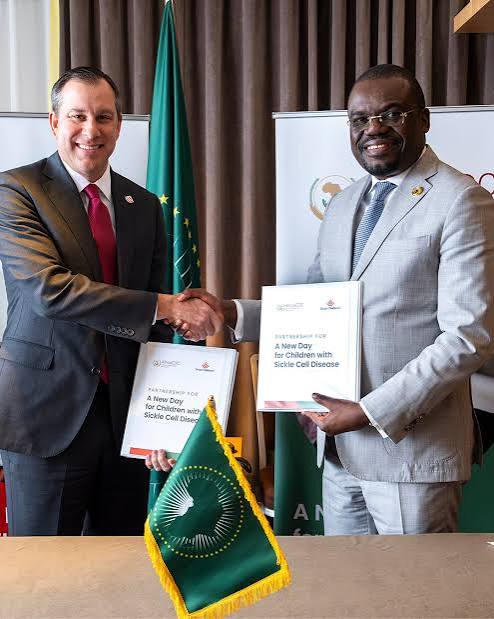
The Africa Centres for Disease Control and Prevention (Africa CDC) and The Geneva Learning Foundation (TGLF) have launched a new partnership to strengthen immunisation across Africa by connecting continental health priorities with frontline health workers and communities.
The partnership will support the implementation of the Continental Immunisation Strategy (CIS), which was launched in April 2026 at the World Health Summit Regional Meeting in Nairobi.
The initiative comes at a time when progress in routine immunisation has stalled across much of Africa. Nearly eight million children remain at risk of vaccine-preventable diseases, while challenges related to access, coordination, governance, community engagement and financing continue to affect vaccination efforts.
Under the African Union’s immunisation commitments, countries are expected to achieve at least 90 per cent national immunisation coverage and 80 per cent coverage in every district. The CIS aims to accelerate progress towards these targets, with particular attention to zero-dose and under-immunised children.
The partnership will draw on TGLF’s network of more than 50,000 health and humanitarian practitioners across African countries. More than 80 per cent of the practitioners work at district and community levels, while about half are employed by governments.
The collaboration aims to establish a two-way channel between continental policy and frontline health delivery. This will help translate CIS priorities into local action while ensuring that evidence and practical experiences from health workers and communities contribute to continental decision-making, scorecards and regional roadmaps.
“This partnership with The Geneva Learning Foundation will augment Africa CDC’s ability to listen to Member States, and adapt our programmes and approaches to the needs of communities, especially those in fragile humanitarian and conflict areas,” said Dr Folake Olayinka, Director of Immunisation at Africa CDC.
According to Charlotte Mbuh, Director of Programmes at TGLF, frontline health workers often have a clearer understanding of the challenges affecting vaccination uptake.
“Often, what gets written down as refusal turns out to be something else: no health worker present that day, a long wait, a bad experience the year before. That knowledge is already in the district. This partnership provides a way for the system to hear it,” she said.
As part of the partnership, technical working groups will be established through designated focal points to coordinate implementation, monitor progress and identify emerging priorities.
The collaboration will focus on gathering frontline evidence, strengthening community trust and supporting existing national health systems. Health workers will document vaccination barriers and locally developed solutions, with the evidence feeding into Africa CDC’s immunisation governance structures, scorecards and regional roadmaps.
In participating countries, health workers will also help identify rumours, concerns and trusted community influencers. They will work with community and religious leaders, women and young people to address barriers to vaccination and improve engagement.
The partnership will further promote peer-to-peer and South-South learning, allowing health workers and Member States to exchange practical approaches and solutions for improving immunisation coverage.
By working through existing health workers and national systems, the initiative seeks to strengthen the capacity of Member States without creating parallel structures that rely on continued external funding.
The collaboration forms part of Africa CDC’s broader Africa Health Security and Sovereignty Agenda and its efforts to build resilient, locally led health systems across the continent.

Leave a Reply