

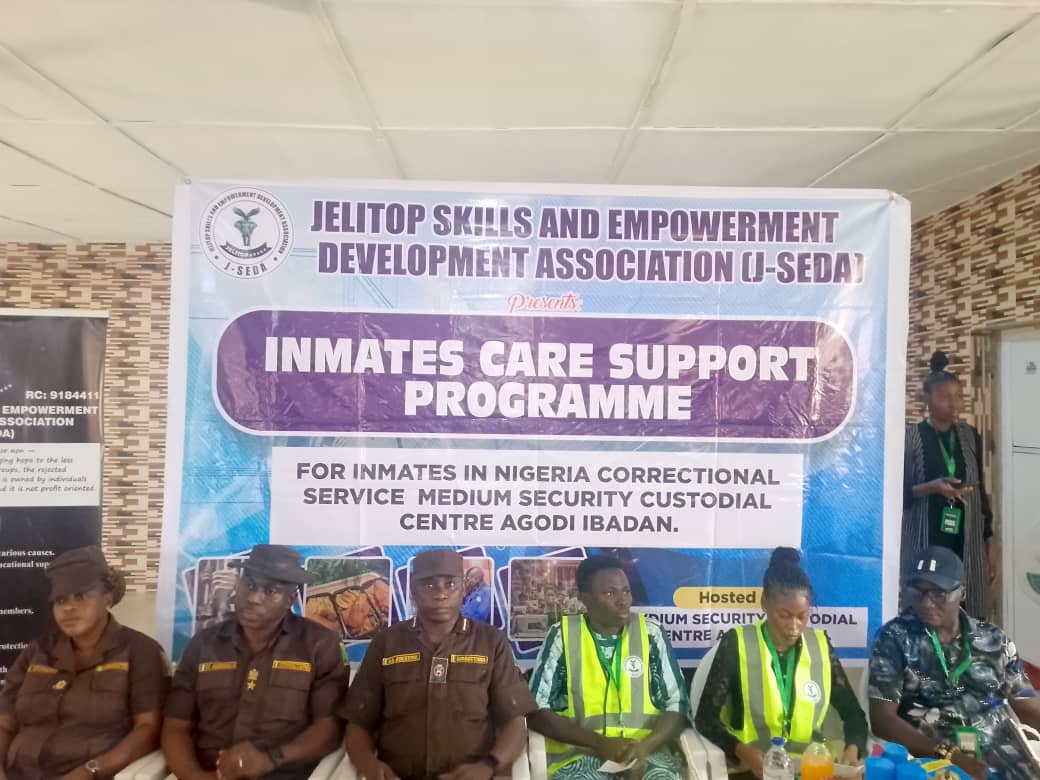
A non-governmental organization, Jelitop Skills and Empowerment Development Association (J-SEDA), has trained and empowered 23 inmates at the Medium Security Custodial Centre, Agodi, Ibadan, with vocational skills aimed at preparing them for productive lives after their release.
According to the News Agency of Nigeria (NAN), the beneficiaries received hands-on training in barbing, hairdressing, bead making and design, and laundry services. Upon completing the program, they were presented with certificates and starter kits to help them establish their own businesses after leaving custody.
Speaking during the graduation ceremony on Wednesday, J-SEDA’s Customer Relations Officer, Miss Eunice Asumo, said the Inmates Care Support Programme was created to equip inmates with practical skills that promote self-reliance and support their successful reintegration into society.
She explained that the certificates and working tools presented to the participants symbolize more than just the completion of a training program.
“They represent hard work, perseverance, newly acquired knowledge, and renewed hope for a brighter future,” Asumo said.
She added that the initiative reflects the organization’s belief that every individual deserves an opportunity to learn, grow, and make meaningful contributions to society when given the right support.
Asumo commended the inmates for their commitment throughout the three-day training, describing their enthusiasm and willingness to learn as clear signs of their determination to build better futures for themselves.
She encouraged the beneficiaries to make good use of the skills they had acquired by remaining disciplined, hardworking, and committed to excellence.
“Use these skills to become successful entrepreneurs, improve your lives, and make positive contributions to your families and communities,” she advised.
Asumo also expressed appreciation to the leadership of the Nigerian Correctional Service, as well as the organization’s sponsors and partners, for supporting the initiative. She noted that their investment in human development continues to restore hope, create opportunities, and transform lives.
The Officer in Charge of the Medium Security Custodial Centre, Agodi, Mr. Sunday Adekunbi, described the empowerment program as an important part of the correctional facility’s rehabilitation strategy.
According to him, vocational training equips inmates with employable skills that will enable them to earn a living and rebuild their lives once they return to society.
“This program goes beyond rehabilitation. It provides inmates with practical skills that will not only benefit them but also support their families after their release,” Adekunbi said.
He noted that many inmates lose their source of income during incarceration, making skills acquisition essential for their successful transition back into society.
“Whether someone spends one year or several years in custody, their ability to provide for themselves and their families is often affected. These vocational skills will give them an opportunity to become economically independent when they regain their freedom,” he added.
Adekunbi praised J-SEDA for its commitment to inmate welfare, describing the organization’s intervention as a valuable contribution to the rehabilitation process.
He urged the beneficiaries to take advantage of the opportunity by applying the skills they had learned to build sustainable livelihoods.
“With dedication and determination, you can become self-reliant and even create employment opportunities for others,” he said.
The initiative highlights the important role non-governmental organizations continue to play in complementing correctional services through rehabilitation and empowerment programs that help former inmates rebuild their lives, reduce recidivism, and contribute positively to society.

Leave a Reply