

The ongoing Ebola outbreak in the Democratic Republic of Congo (DRC) and Uganda could enter a far more dangerous phase unless public health measures are urgently strengthened, according to new modelling by the United States Centres for Disease Control and Prevention (CDC).
With confirmed infections approaching 2,000, researchers warn the outbreak could exceed 10,000 cases by late August if efforts to rapidly detect, isolate and treat infected patients are not significantly improved.
The DRC remains the centre of the outbreak, reporting 1,759 confirmed cases, 600 deaths and 285 recoveries. Uganda has confirmed 20 cases, including two deaths and 17 recoveries, while France has reported one imported case, with the patient recovering.
Overall, the outbreak has reached 1,780 confirmed cases, 602 deaths and 303 recoveries, underscoring the need to slow transmission before infections accelerate further.
The CDC study, which analysed outbreak data up to May 24, 2026, examined how the epidemic could develop over the following three months under different public health response scenarios. Researchers emphasised that the findings are projections rather than predictions, illustrating how different levels of intervention could influence the outbreak’s trajectory.
How disease modelling helps health experts prepare for outbreaks
Disease modelling uses data on where infections are occurring, how quickly the virus is spreading and who has been exposed. Computer simulations then estimate how interventions such as early diagnosis, patient isolation, contact tracing and treatment could change the course of an outbreak.
The approach became widely recognised during the Covid-19 pandemic, when models helped governments estimate hospital admissions, oxygen demand and the likely effects of vaccination campaigns, movement restrictions and mask mandates. Although models cannot predict the future with certainty, they provide valuable guidance for emergency planning.
Experts say community transmission remains a major concern
For Dr Moses Masika, consultant virologist and senior lecturer in the Department of Medical Microbiology and Immunology at the University of Nairobi, the latest findings reflect growing concerns among frontline health experts.
“The concern is that we are now seeing many people testing positive who are outside the known contact networks,” he said. “If everybody testing positive was within the known circle of contacts, we would know the outbreak was largely under control. But when more than half of those testing positive are new to the network, it means transmission is much wider than we can currently account for.”
Dr Masika said one of the key differences between the outbreaks in Uganda and eastern DRC is the ability to trace infections.
“In Uganda, they have largely been able to trace where people got the disease from within a certain network. In the DRC, that has not been the case. That means transmission in the community is much broader than what we are seeing.”
He added that the outbreak’s geography is making containment more difficult.
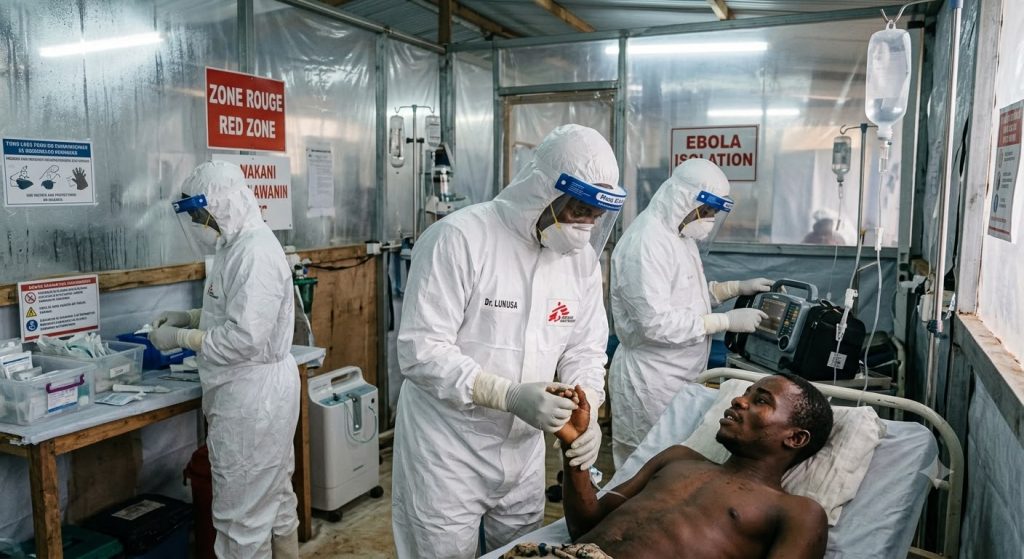
“It has spread across about four provinces bordering South Sudan, Uganda, Rwanda and Burundi. It is a vast area that is remote and poorly connected,” he said.
According to Dr Masika, mistrust of health workers during the early stages of the outbreak may also have contributed to wider community spread.
“Many communities were reluctant to cooperate with health workers or seek treatment when they became ill. That means the disease may have spread much longer than we initially realised.”
WHO says Ebola outbreak has not yet stabilised
The concerns raised by researchers are echoed by the World Health Organisation (WHO), which says the outbreak is still expanding.
WHO Representative in the Democratic Republic of Congo Dr Anne Ancia said health authorities have not yet reached a point where the outbreak can be considered stable.
“It is still in the expansion phase. We would like to say it is stabilising, but we cannot yet do so,” she said, noting that many patients still seek treatment too late, increasing the risk of infecting relatives.
Early case detection could dramatically reduce Ebola infections
Rather than estimating a single outcome, CDC researchers modelled hundreds of possible outbreak scenarios based on different levels of public health intervention.
The analysis found that if only 20 per cent of symptomatic patients are identified and isolated quickly, there is a 65 per cent chance the outbreak could exceed 20,000 cases within three months.
However, increasing rapid identification and isolation to around 70 per cent reduces the likelihood of the outbreak surpassing 10,000 cases to just five per cent, equivalent to one in every 20 simulations.
The researchers concluded:
“Our findings highlight the importance of rapidly scaling up case detection, isolation, treatment, contact tracing and community engagement.”
The study also showed that improving the proportion of symptomatic patients isolated, from as low as 20 per cent to as high as 95 per cent, could significantly reduce onward transmission, with every patient identified early helping prevent multiple new infections.
No licensed vaccine yet for Bundibugyo Ebola strain
WHO Director-General Dr Tedros Adhanom Ghebreyesus has also warned that the outbreak continues to spread faster than response efforts because of insecurity, attacks on health workers and ongoing community mistrust.
The current outbreak is caused by the Bundibugyo strain of the Ebola virus. Although it is less common than the Zaire strain, Dr Masika said both cause almost identical illness and can only be distinguished through laboratory testing.
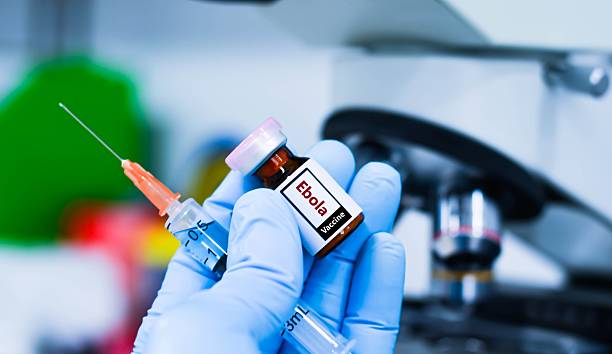
Unlike the Zaire strain, the Bundibugyo strain does not currently have a licensed vaccine.
WHO has nevertheless launched therapeutic trials in the DRC to evaluate potential treatments. Dr Tedros described the initiative as an important step towards generating evidence that could improve patient survival.
Preparedness remains critical beyond affected countries
The latest findings also reinforce the importance of preparedness beyond the countries directly affected by the outbreak.
For neighbouring nations, including Kenya, strengthening border surveillance, laboratory testing capacity and emergency preparedness could help health authorities detect and respond to any imported cases more quickly, reducing the risk of wider regional transmission.

Leave a Reply