

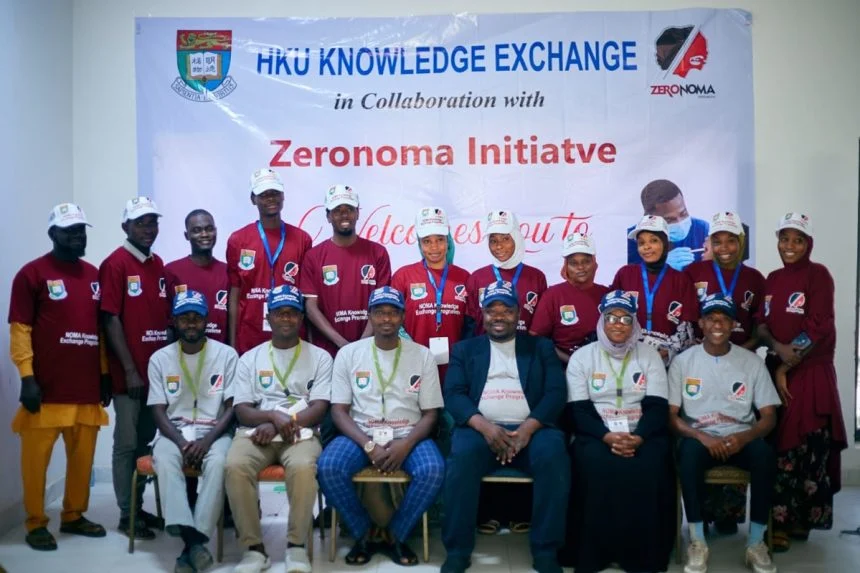
Noma moves fast and kills quietly. The flesh destroying disease starts in the mouth of a malnourished child and, left untreated, can be fatal within weeks. The children most at risk live in exactly the places least likely to have a health worker who can recognise it. ZeroNoma Initiative is trying to close that gap one trained volunteer at a time.
The Nigerian organisation, working with the Faculty of Dentistry at the University of Hong Kong, has trained more than 150 frontline workers to screen for noma and find cases across Bauchi and Kano states. The programme, run between 12 and 21 February 2026 under the title Noma Knowledge Exchange Programme, was built to strengthen early recognition of the disease in high risk local government areas where it too often goes unseen until it is too late.
The design is deliberately built to spread. ZeroNoma Initiative used a train the trainer model, first equipping lead volunteers and trainers in both states, who then ran simultaneous frontline sessions at seven locations. Coordinated by David Emmanuel and Dr Yusuf Bako of ZeroNoma Initiative, participants learned to identify the early signs and stages of noma and to carry out oral and nutritional assessments in children, with a heavy emphasis on timely referral before the disease progresses.
The training was also grounded in data. Dr John Adeoye of the HKU Faculty of Dentistry mapped where noma clusters across Northern Nigeria, drawing on patient records from the Noma Children’s Hospital in Sokoto to point workers toward the communities where screening will find the most cases. That is the strategic core of the effort: not blanket awareness, but targeted detection aimed at the places the evidence flags as most dangerous.
The newly trained workers are set to move from classroom to community in a screening and case finding exercise in high risk parts of Kano and Bauchi beginning in June 2026. Early detection remains the single most decisive factor in whether a child with noma lives or is left disfigured, which makes a trained eye at the community level one of the cheapest interventions with the highest stakes.

Leave a Reply