

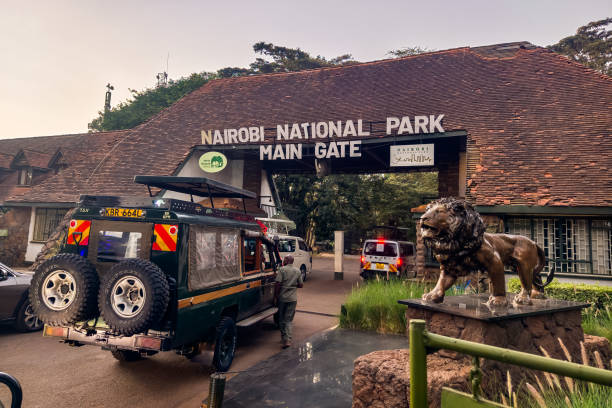
A coalition of 4,642 Kenyans has moved to court seeking to halt construction projects inside Nairobi National Park, arguing that the developments threaten a protected wildlife sanctuary and are proceeding without meeting constitutional and statutory requirements.
The petition, filed before the Environment and Land Court in Kajiado under the Save Nairobi National Park (SaveNNP) initiative, challenges the planned relocation of the Nairobi Animal Orphanage to a new site within the park.
The petitioners are also seeking orders to stop the construction of a 1,300-vehicle parking facility, an access road and a pedestrian bridge linking the project to the Bomas International Convention Centre (BICC).
According to the petition, the developments are proceeding without mandatory statutory approvals, adequate public participation or parliamentary approval required for any alteration of land within a gazetted national park.
The petitioners are asking the court to permanently stop all construction associated with the relocated animal orphanage, parking facility, access road and pedestrian bridge.
They also want the court to declare the developments unconstitutional and unlawful, quash the environmental licence issued by the National Environment Management Authority (NEMA), compel restoration of any degraded sections of the park and prohibit future development unless all constitutional and statutory requirements are fully complied with.
Protected ecosystem at centre of dispute
The petitioners argue that Nairobi National Park is not only a protected area but also a globally unique ecosystem deserving the highest level of legal protection.
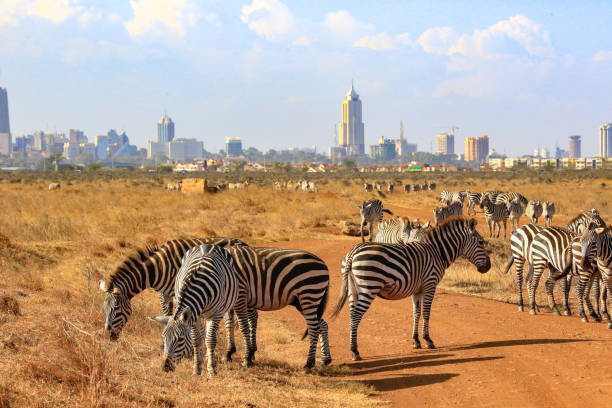
According to the petition, the 117-square-kilometre sanctuary was gazetted in 1946 as Kenya’s first national park and is the only fully protected national park located within a capital city.
They further state that the park is a designated rhino sanctuary, an internationally recognised Important Bird and Biodiversity Area and a critical wildlife refuge within the wider Athi-Kapiti ecosystem in Kajiado County.
Court documents state that the proposed relocation of the Nairobi Animal Orphanage would occupy a significantly larger area than the existing facility while introducing permanent infrastructure into what the petitioners describe as an ecologically sensitive section of the park.
The project also includes an electric perimeter fence, a pedestrian bridge crossing Lang’ata Road and a parking facility capable of accommodating 1,300 vehicles, directly linked to the Bomas International Convention Centre.
Environmental approvals
At the heart of the case is the Environmental Impact Assessment (EIA), which the petitioners argue did not adequately assess the long-term ecological consequences of the proposed developments.
“The proposed 1,300-vehicle parking facility on approximately 8 acres of open grassland within Nairobi National Park introduces a suite of irreversible, long-term ecological impacts that the EIA wholly fails to assess.”
The petitioners also argue that the pedestrian bridge is a separate infrastructure project that should have undergone its own Environmental Impact Assessment because it connects two legally distinct parcels of land.
“There’s no evidence that this bridge has its own EIA. Its inclusion within the scope of the orphanage EIA, without a separate EIA.”
According to the petition, this either demonstrates that the primary purpose of the development is to serve the Bomas International Convention Centre, which the EIA does not assess, or that a separate project was incorporated into the orphanage proposal to avoid independent regulatory scrutiny.
Inconsistencies in project documents
The petition also points to what the petitioners describe as inconsistencies in official project documents.
According to the court filings, different documents describe the project as covering 26 acres, 64 acres, 76.6 acres or nearly 90 acres. The estimated project cost is also said to vary across official records.
The petitioners argue that these inconsistencies undermine the credibility of the Environmental Impact Assessment on the basis of which NEMA issued the project’s environmental licence in December 2025.
They further claim that the EIA report and environmental licence were not made available to the public until more than two months after approval, despite repeated requests by conservation groups seeking access to the documents and consultations.
According to the petition, construction activities, including tree felling, excavation and land clearing, began in March 2026 before several approvals required under the environmental licence had been obtained.
The petition states that approvals relating to planning, building regulations, traffic management and effluent discharge had not been secured before construction commenced.
Concerns over wildlife habitat
The petitioners argue that the disputed site contains indigenous highland dry forest, grassland, seasonal wetlands and wildlife habitat supporting species including lions, leopards, black rhinoceroses, cheetahs, hyenas and hundreds of bird species.
They reject assertions by the Kenya Wildlife Service (KWS) that the project affects only open grassland, arguing that grasslands and forest glades form an integral part of the park’s ecological system.
According to the petition, these habitats provide feeding grounds, breeding areas and wildlife movement corridors while supporting the wider food chain within the park.
The petition further warns that converting approximately eight acres into a parking facility would permanently eliminate wildlife habitat while introducing increased noise, lighting, pollution and human activity into what the petitioners describe as one of the park’s most sensitive ecological areas.
The petition names the Kenya Wildlife Service, the National Environment Management Authority, the Cabinet Secretaries responsible for Tourism and Wildlife and Environment, the Kenya Forest Service, Bomas of Kenya Limited, the Nairobi County Government and the Attorney General as respondents. Friends of Nairobi National Park has been listed as an interested party.

Leave a Reply