

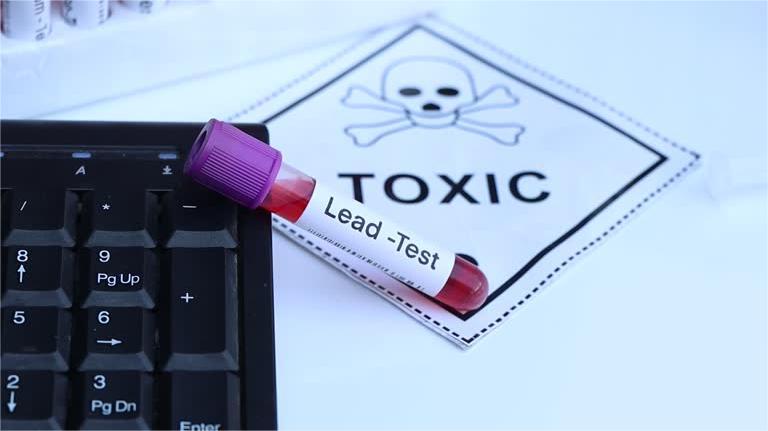
More than a decade after toxic lead pollution devastated the Owino Uhuru community in Mombasa, Kenya’s courts have intensified pressure on the National Environment Management Authority (NEMA) to compensate affected residents.
In a fresh ruling, the Environment and Land Court in Mombasa ordered NEMA to present a clear plan for paying KSh2 billion (about $15 million) awarded to victims of one of the country’s worst environmental pollution disasters.
The order marks another significant step in a legal battle that has become a landmark case for environmental justice in Kenya.

Justice Belinda Akello directed NEMA’s Director General to personally file an affidavit outlining a clear, verifiable and legally binding commitment on how the compensation will be paid.
The court also instructed the parties to agree on a realistic payment schedule that, once filed, would become a binding court order.
“Let it be known to the 4th respondent and its leadership that this deferment is not an acquittal, nor is it an indulgence of bureaucratic lethargy. It is transitional accommodation. This serves as the absolute final warning,” Justice Akello warned.
She further cautioned that failure to comply would trigger immediate enforcement measures.
“Should the director general fail to file the mandated affidavit, or should the parties fail to present a mutually agreed payment structure on the next date, the application to make the garnishee order nisi absolute shall be granted automatically on the return date without further hearing, and the funds held by the garnishee bank shall be attached and released to the applicant forthwith.”
The latest proceedings followed an application by Kelvin Musyoka and nine other residents seeking to enforce earlier court orders after delays in implementing the compensation award.
Owino Uhuru, an informal settlement in Mombasa County, became the centre of national attention after a lead-acid battery recycling plant operated by Metal Refinery (EPZ) Ltd was accused of releasing toxic lead into the surrounding environment.
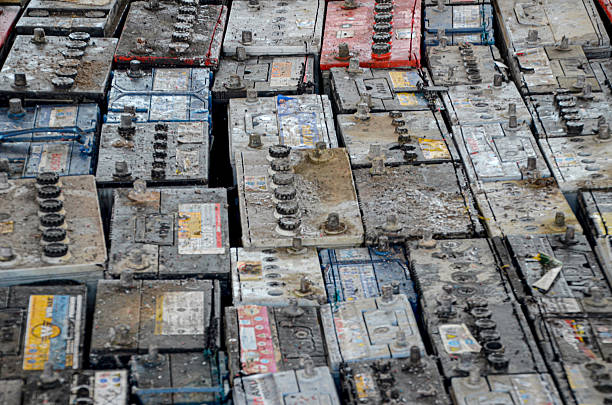
Residents said the pollution contaminated their neighbourhood, leading to widespread illness and deaths.
The factory operated between approximately 2007 and 2014 before shutting down following public pressure and investigations.
Government investigations had already raised concerns about lead contamination and the associated health risks as early as 2009.
Despite these concerns, NEMA had issued the company with an Environmental Impact Assessment (EIA) licence and later allowed it to conduct “test runs”.
The Supreme Court later found that the environmental regulator had failed to fulfil its statutory responsibility to protect the environment and prevent pollution.
The judges concluded that NEMA’s failure to stop the pollution established a direct causal link between the agency’s negligence and the injuries suffered by residents.
The judgment further affirmed that safeguarding the constitutional right to a clean and healthy environment is a responsibility shared by all State agencies, including NEMA.
The compensation stems from a series of court decisions spanning several years.
In 2020, the Environment and Land Court awarded compensation to affected residents.
The decision was later upheld by the Supreme Court on December 6, 2024, which affirmed awards of KSh1.3 billion for victims and KSh700 million for environmental restoration, bringing the total to KSh2 billion.
Besides NEMA, the Attorney General, the Cabinet Secretaries responsible for Environment and Health, and the Export Processing Zones Authority (EPZA) were sued over regulatory failures linked to the operations of Metal Refinery (EPZ) Ltd.
The company was found directly responsible for the toxic emissions, while Penguin Paper and Book Ltd was listed as a respondent regarding the property and the surrounding area where the hazardous operations took place.
Although the battery recycling plant ceased operations more than a decade ago, many residents continue to live with the long-term effects of lead exposure.
An April 2026 Associated Press report indicated that illnesses linked to historic lead contamination continue to affect members of the community.
The report also noted that activists have continued to express concern over delays in implementing the compensation ordered by the courts.
Beyond Owino Uhuru, experts have warned that unsafe recycling of lead-acid batteries remains a broader environmental and public health challenge across Africa.
For the residents who spent years seeking accountability, the latest court orders represent another important milestone. Whether the long-awaited compensation finally reaches the affected families now depends on NEMA’s compliance with the court’s latest directives and the implementation of a legally binding payment plan.

Leave a Reply