
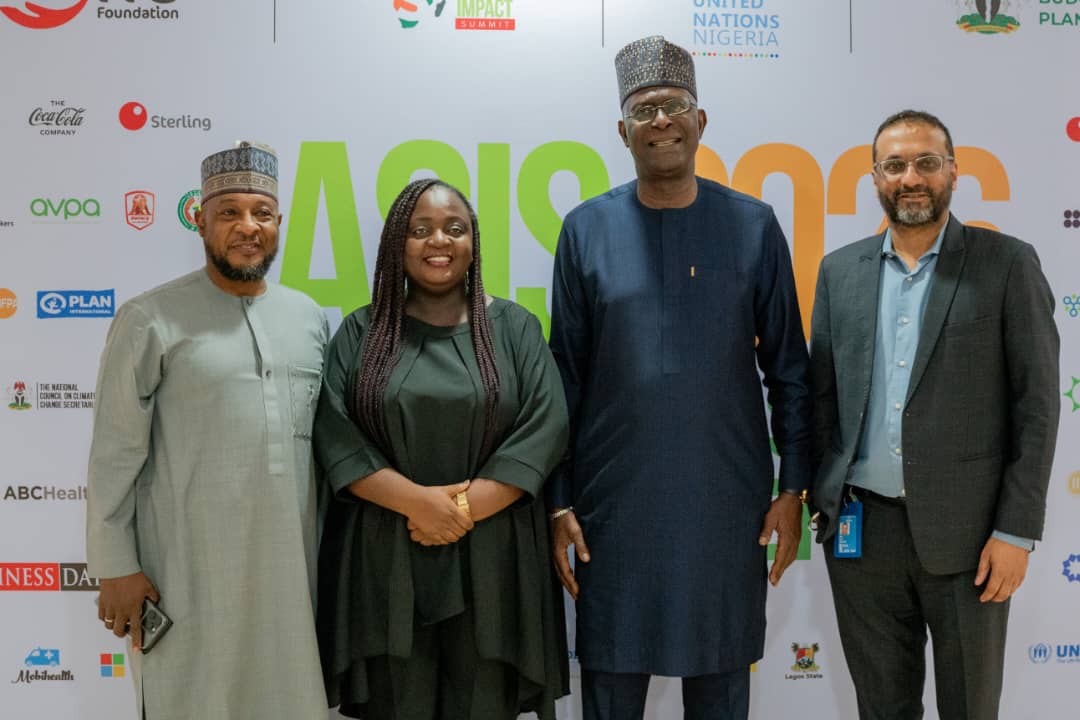
The Africa Social Impact Summit 2026 was officially unveiled at a high-level press conference at the United Nations House in Abuja on June 17, co-hosted by Sterling One Foundation and the United Nations in Nigeria. The summit itself lands in Lagos from July 22 to 24 at the Eko Convention Centre. For anyone working at the intersection of capital, policy, and social change on this continent, that is a date worth marking.
This is not a conference about development. It is a conference about financing development. The distinction matters enormously.
The theme of this year’s edition is “Financing for Development: Building Resilience and Transforming Emerging Economies” — a framing that directly confronts what has become the defining tension in African development: the gap between ambition and capital. Plans, strategies, and frameworks are not in short supply across the continent. The supply constraint is patient, appropriately structured, sufficiently scaled capital that can move from commitment to deployment without losing its social intent along the way.
ASIS 2026 enters that gap with a quantified track record. Olapeju Ibekwe, CEO of Sterling One Foundation, confirmed that the ASIS platform has already unlocked over $1 billion across sectors since its inception, and expressed expectation that deals worth over $500 million will be signed at this year’s edition alone. Those are not promotional numbers. They are performance benchmarks that the summit now has to beat.
Ibekwe described ASIS as a platform that brings together African leaders, local and international investors, innovative ideas, and catalytic capital to address pressing challenges while unlocking opportunities for inclusive and sustainable growth. What makes that description substantive rather than ceremonial is the institutional weight behind it. Expected to welcome more than 2,000 delegates from over 50 countries, the summit will convene heads of government, multilateral organizations, development finance institutions, global investors, corporate executives, entrepreneurs, philanthropists, and social innovators.
That is the kind of room where deals get done. Not announced. Done.
The UN’s presence as co-convener is not decorative. Mohamed Malick Fall, UN Resident Coordinator in Nigeria, framed the summit’s value in terms of collective action, noting that ASIS provides a platform where governments, the private sector, development partners, and civil society come together to mobilize the investments, innovation, and collaboration needed to accelerate SDG progress. The SDG clock is running. With 2030 now less than four years away and the majority of African countries significantly off-track on most goals, the urgency behind that language is not rhetorical. thecable
Abubakar Suleiman, Board Member of Sterling One Foundation, was direct about what separates ASIS from the ecosystem of Africa-focused convenings that have proliferated over the last decade: the conversations happening there must translate into real commitments, measurable outcomes, and partnerships that outlive the summit itself. The word “outlive” is the operative one. Too many African development convenings generate excellent documentation and little durable action. Suleiman is naming that failure mode and positioning ASIS against it.
The sectors on the 2026 agenda read like a map of the continent’s most underfunded priorities: education, healthcare, climate resilience, food systems, gender equality and women’s empowerment, youth development, the creative economy, and sustainable finance. The creative economy’s inclusion on that list is worth noting specifically. Africa’s creative sector generates an estimated $4.2 billion annually and employs millions, yet it remains chronically underrepresented in development finance portfolios. Its inclusion at ASIS signals a broadening of what counts as “development-worthy” investment.
The timing of ASIS 2026 also connects to a larger global conversation. This publication recently covered Calvert Impact CEO Jenn Pryce’s argument that impact funds need to scale to multi-billion dollar sizes to attract the institutional capital required to match the scale of global social and environmental challenges. ASIS is the on-the-ground African version of that same argument: that the era of small-tent, low-commitment development convenings must give way to platforms capable of moving serious capital with serious accountability. The $1 billion already unlocked is proof of concept. The $500 million target for 2026 is the proof of scale.
For impact practitioners, NGO leaders, investors, and policymakers across Africa, the question is not whether ASIS 2026 matters. The question is whether you will be in the room when the decisions are made.
Lagos is thirty days away.
EVENT DETAILS
Africa Social Impact Summit 2026
July 22 to 24, 2026 | Eko Convention Centre, Lagos, Nigeria
Theme: Financing for Development: Building Resilience and Transforming Emerging Economies
Website: theimpactsummit.org

Leave a Reply