
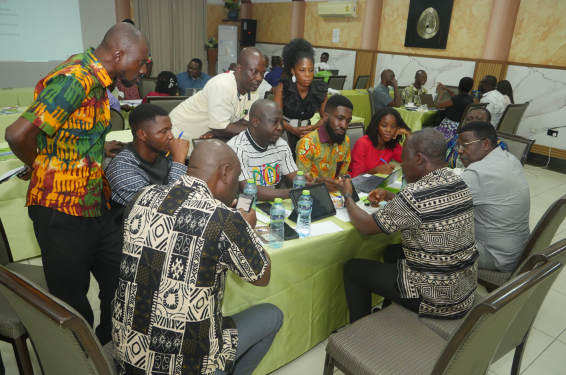
SEND Ghana and Oxfam have mobilised civil society organisations (CSOs) and young people to develop proposals for consideration in Ghana’s 2027 National Budget, as the Ministry of Finance intensifies preparations for the Budget Statement and Economic Policy.
The initiative aims to ensure that government spending reflects citizens’ needs and development priorities while supporting progress towards the Sustainable Development Goals (SDGs).
At a meeting held in Accra, representatives from more than 30 civil society organisations under the Ghana CSO Platform on SDGs, drawn from the Eastern, Volta, Central, Western, Bono, Ashanti and Greater Accra regions, identified key challenges affecting education, healthcare, gender equality, social protection, and water, sanitation and hygiene (WASH).
Participants also proposed priority interventions for the government to consider in preparing the 2027 national budget.
In education, the organisations and young people called for the completion of abandoned E-blocks and 200-KG school blocks, alongside the deployment of special needs educators to mainstream schools to strengthen inclusive education.
They also urged the government to prioritise teacher deployment and provide housing for teachers in deprived communities to improve access to quality education.
In the health sector, participants advocated an increase in the health budget to at least 15 per cent of the national budget, in line with the Abuja Declaration.
They further called for adequate funding to ensure the continuous supply of essential medicines and medical equipment, strengthen emergency preparedness and expand preventive interventions to reduce the burden of non-communicable diseases.
The participants also stressed the need to increase domestic financing for family planning commodities and services to improve access to essential reproductive health services.
On water, sanitation and hygiene, the organisations called for dedicated funding for annual water quality monitoring and the maintenance of water and sanitation facilities.
They also proposed that at least two per cent of the WASH budget be earmarked for disability-friendly and menstrual health-friendly facilities in schools and health centres.
Country Director of SEND Ghana, Harriet Nuamah Agyemang, emphasised the importance of ensuring that national budgets reflect the realities and aspirations of citizens.
She urged civil society organisations and members of the public to participate in budget hearings being organised across the regions to present their concerns and contribute to decisions on public spending.
Participants commended SEND Ghana, Oxfam and their partners for providing a platform through which citizens could communicate community-level challenges and propose solutions for consideration in the national budget.
Edmond Gyebi, Advocacy and Communications Officer for Citizens Watch Ghana, said the engagement had enabled participants to discuss the problems confronting their communities and advocate a budget that responds to those needs.
He noted that the process reinforced the importance of ensuring that the national budget delivers practical improvements in people’s lives rather than appearing impressive on paper.
The proposals gathered from civil society organisations and citizens will be submitted to the Ministries of Finance; Gender, Children and Social Protection; Health; Education; and the ministry responsible for water and sanitation.
SEND Ghana has called on the relevant ministries to consider the recommendations in preparing the 2027 National Budget to ensure that public expenditure addresses citizens’ priorities and supports inclusive and sustainable development.
The initiative highlights the role of citizen participation and civil society advocacy in public financial planning, particularly in ensuring that budgetary decisions address persistent gaps in education, healthcare, social protection and access to essential services.

Leave a Reply