Defence & Security
Kenya welcomes resumption of UK military training program.
 Mitchelle WawiraJuly 29, 2026 · 4 min read
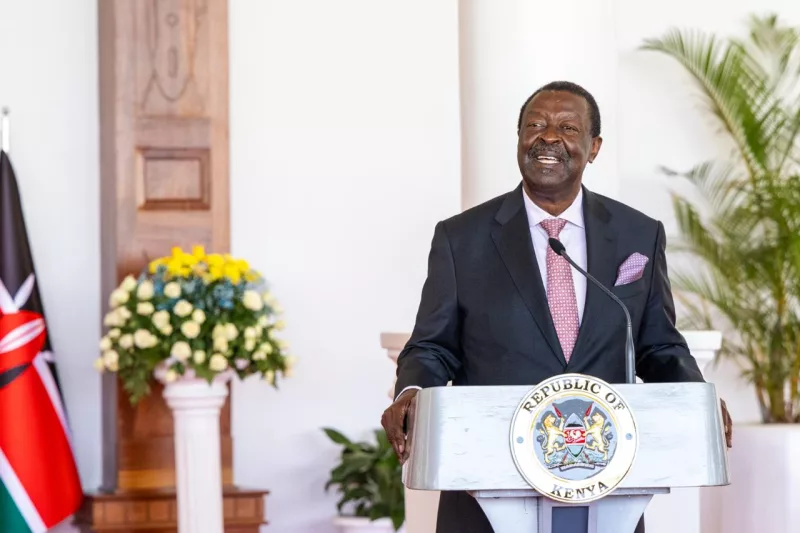
Prime Cabinet Secretary Musalia Mudavadi has welcomed the resumption of joint military training exercises between Kenya and the United Kingdom, describing the decision as a reflection of the enduring defence partnership between the two countries after weeks of uncertainty.
In a statement issued on Tuesday, 28 July, Mudavadi confirmed that the planned military exercise at the British Army Training Unit Kenya (BATUK) will proceed later this year, following the resolution of issues that had delayed the programme.
“The Government of Kenya welcomes the decision to proceed with the planned military training exercise at the British Army Training Unit Kenya,” Mudavadi said.
The announcement comes after concerns raised by the National Assembly Defence, Intelligence and Foreign Relations Committee, which had delayed consideration of a new Kenya–UK Defence Cooperation Agreement over unresolved human rights allegations linked to BATUK operations.
The committee had called for greater accountability regarding issues including the murder of Agnes Wanjiru and other allegations involving British soldiers training in Kenya before approving the agreement.
Mudavadi, however, said the latest development demonstrates that both governments have successfully addressed the outstanding concerns through dialogue and constructive engagement.
“This outcome reflects the strength of the longstanding partnership between Kenya and the United Kingdom, built over decades on mutual respect, constructive engagement and a shared commitment to peace and security,” he said.
“It demonstrates that trusted partners can work through challenges in a spirit of goodwill and continue moving forward together.”
The Kenya–UK defence partnership remains one of Kenya’s longest-standing military collaborations, with British troops regularly conducting training exercises in the country while supporting joint capacity-building initiatives for the Kenya Defence Forces (KDF).
According to the Kenyan government, the partnership extends beyond military cooperation by generating significant economic benefits for communities hosting the training exercises, particularly in Laikipia County and neighbouring areas.
Mudavadi noted that the collaboration continues to strengthen Kenya’s national security by enhancing the operational capabilities of the KDF while contributing to regional peace and stability.
“The Kenya–United Kingdom defence partnership continues to advance Kenya’s national interests. It strengthens the capabilities of the Kenya Defence Forces, contributes to regional peace and security, supports Kenyan jobs and businesses, and provides significant economic benefits to the communities that host these activities,” he said.
The decision to resume the military exercises is expected to ease tensions that emerged following parliamentary scrutiny of the proposed defence agreement.
Last week, Nelson Koech, Chairperson of the National Assembly Defence, Intelligence and Foreign Relations Committee, emphasised that Parliament supports military cooperation with the United Kingdom but insisted that accountability over alleged human rights violations remains essential to maintaining public confidence in the partnership.
Among the concerns raised by lawmakers were allegations of environmental degradation, sexual assault, murder and the unresolved case of Agnes Wanjiru, whose body was discovered in Nanyuki in 2012 after she was reportedly last seen with a British soldier.
Despite these concerns, both governments have reaffirmed their commitment to resolving outstanding issues while preserving a strategic defence relationship that has existed for decades.
Mudavadi said Kenya remains committed to strengthening cooperation with the United Kingdom in ways that deliver mutual benefits.
“We value the close cooperation and shared commitment between Kenya and the United Kingdom that have enabled this positive outcome,” he said.
“Our focus remains on strengthening a partnership that delivers lasting benefits for both nations and their people.”
He added that Kenya will continue working closely with the UK to deepen defence cooperation and advance their shared commitment to peace, security and regional stability.
The statement follows confirmation from the UK Government that Kenya has agreed to issue the licences and permissions required for the military exercise to proceed.
A UK government spokesperson said:
“We can confirm that the Kenyan Government has agreed to issue the necessary licences and permissions for Exercise HARAKA STORM to take place in Kenya later this year.”
The spokesperson added that both countries value their close cooperation and shared commitment, which made the breakthrough possible.
“As a result, and following detailed work by the Army, we believe it will be possible to conduct the training in Kenya within the same timeframe as originally planned. Exercise HARAKA STORM will now take place later this year.”
The UK also reaffirmed its commitment to strengthening its longstanding military partnership with Kenya.
“The UK remains committed to working closely with the Government of Kenya to further strengthen our deep and enduring military partnership, which continues to benefit both the UK and Kenya while advancing our shared goals and strategic interests,” the spokesperson said.