

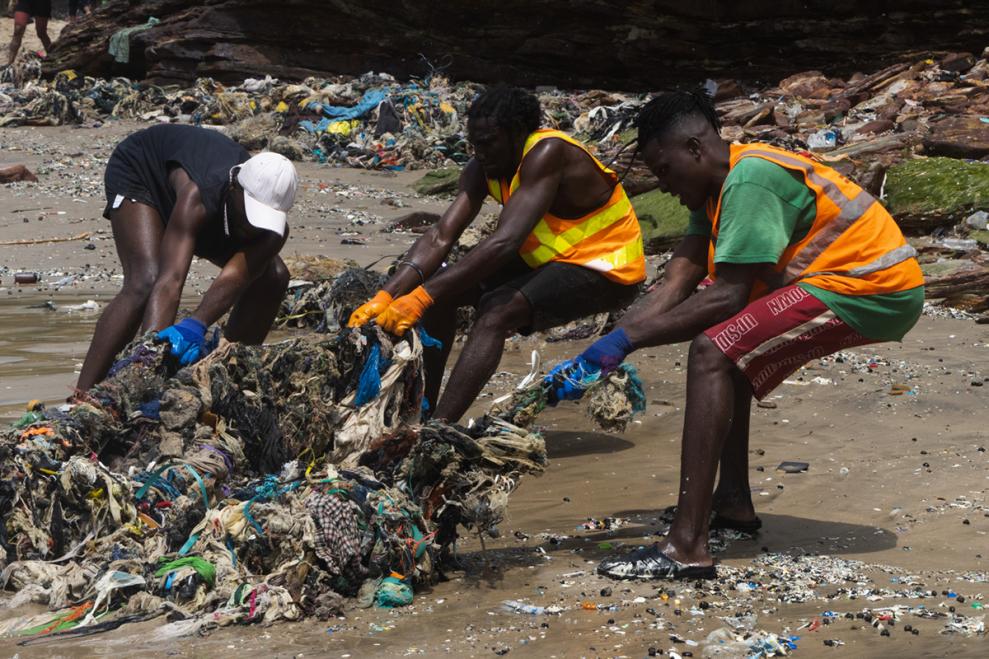
In the bustling heart of Accra, where thousands of traders, artisans, and entrepreneurs gather daily at Kantamanto Market, one organization is quietly driving a movement that is transforming lives while tackling one of the world’s growing environmental challenges. The Or Foundation has emerged as a leading force in promoting environmental justice, sustainable fashion, and community development in Ghana, proving that local action can create global impact.
For many people, Kantamanto Market is simply a place to buy affordable second-hand clothing. However, behind the vibrant marketplace lies a complex reality. Every week, millions of used garments arrive in Ghana from Europe, North America, and other parts of the world. While many of these clothes are reused and resold, a significant portion becomes waste, creating environmental and economic challenges for local communities.
Recognising both the opportunities and challenges within this system, The Or Foundation has dedicated itself to supporting the people whose livelihoods depend on the second-hand clothing trade while advocating for a more sustainable global fashion industry. Through its work, the organisation is helping thousands of Ghanaians improve their livelihoods, protect the environment, and build stronger communities.
Founded in 2011, The Or Foundation operates at the intersection of environmental sustainability, education, economic empowerment, and social justice. Its work is rooted in the belief that communities affected by environmental challenges should be empowered to shape the solutions. This philosophy has guided the foundation’s efforts in Kantamanto and beyond, where it continues to address the social and environmental impacts of textile waste.
One of the organisation’s most significant contributions has been its support for the thousands of people who earn a living through the second-hand clothing economy. Kantamanto Market is home to traders, tailors, repairers, dyers, transporters, and waste collectors who work tirelessly to extend the life cycle of clothing. By supporting repair, reuse, and upcycling initiatives, The Or Foundation helps create economic opportunities while reducing the volume of textile waste entering the environment.
The foundation has also become a champion for environmental protection in Accra. Textile waste has become a growing concern, often finding its way into drains, lagoons, beaches, and informal dumping sites. These waste materials contribute to flooding, pollution, and threats to marine ecosystems. Through initiatives such as the Kanta Keepers programme, The Or Foundation works alongside local waste collectors and community members to remove textile waste from the environment and improve waste management practices within and around the market.
Beyond environmental conservation, the organisation is making a profound impact on the lives of vulnerable workers, particularly women. Many women working in and around Kantamanto face economic uncertainty and difficult working conditions. Through skills development programmes, educational opportunities, and creative entrepreneurship initiatives, The Or Foundation is helping individuals build more sustainable livelihoods. These programmes empower participants to transform discarded materials into valuable products, creating new income streams while reducing waste.
Innovation remains at the core of the foundation’s approach. Rather than viewing unwanted clothing as rubbish, The Or Foundation promotes a circular economy model that encourages repair, reuse, redesign, and recycling. Local artisans and designers are supported to create new products from discarded textiles, demonstrating how waste can become a resource. This approach is not only generating employment but is also positioning Ghana as a leader in sustainable fashion and circular economy solutions.
The organisation’s influence extends beyond Ghana’s borders. Through international advocacy campaigns, The Or Foundation has brought global attention to the environmental and social consequences of fast fashion. It has challenged fashion brands and consumers to rethink the lifecycle of clothing and take greater responsibility for textile waste. By amplifying the voices of traders and workers in Kantamanto, the foundation is ensuring that the experiences of Ghanaian communities are included in global conversations about sustainability and climate justice.
Its commitment to community welfare was further demonstrated following the devastating fire that affected sections of Kantamanto Market in 2025. The disaster threatened the livelihoods of thousands of traders and workers. In response, The Or Foundation provided financial support and mobilised resources to assist affected individuals and contribute to rebuilding efforts. The intervention reinforced the organisation’s dedication to supporting communities not only during periods of growth but also in times of crisis.
Today, the impact of The Or Foundation can be seen in cleaner communities, stronger livelihoods, increased environmental awareness, and a growing movement toward sustainable development. Its work highlights the importance of community-led solutions in addressing global challenges such as climate change, pollution, and unsustainable consumption patterns.
As Ghana continues to pursue sustainable development and environmental resilience, The Or Foundation stands as a powerful example of how innovation, compassion, and community engagement can create meaningful change. By investing in people, promoting environmental stewardship, and advocating for a more responsible fashion industry, the organisation is helping build a future where both people and the planet can thrive.
The story of The Or Foundation is ultimately a story of transformation, transforming waste into opportunity, challenges into solutions, and communities into agents of change. Through its continued efforts, thousands of Ghanaians are finding hope, opportunity, and a pathway toward a more sustainable future.

Leave a Reply