Governance, Policy & Accountability
Burkina Faso Dissolves 118 NGOs, and the Country’s Aid Backbone Takes the Hit.
 Jessy NwankamaJuly 10, 2026 · 2 min read

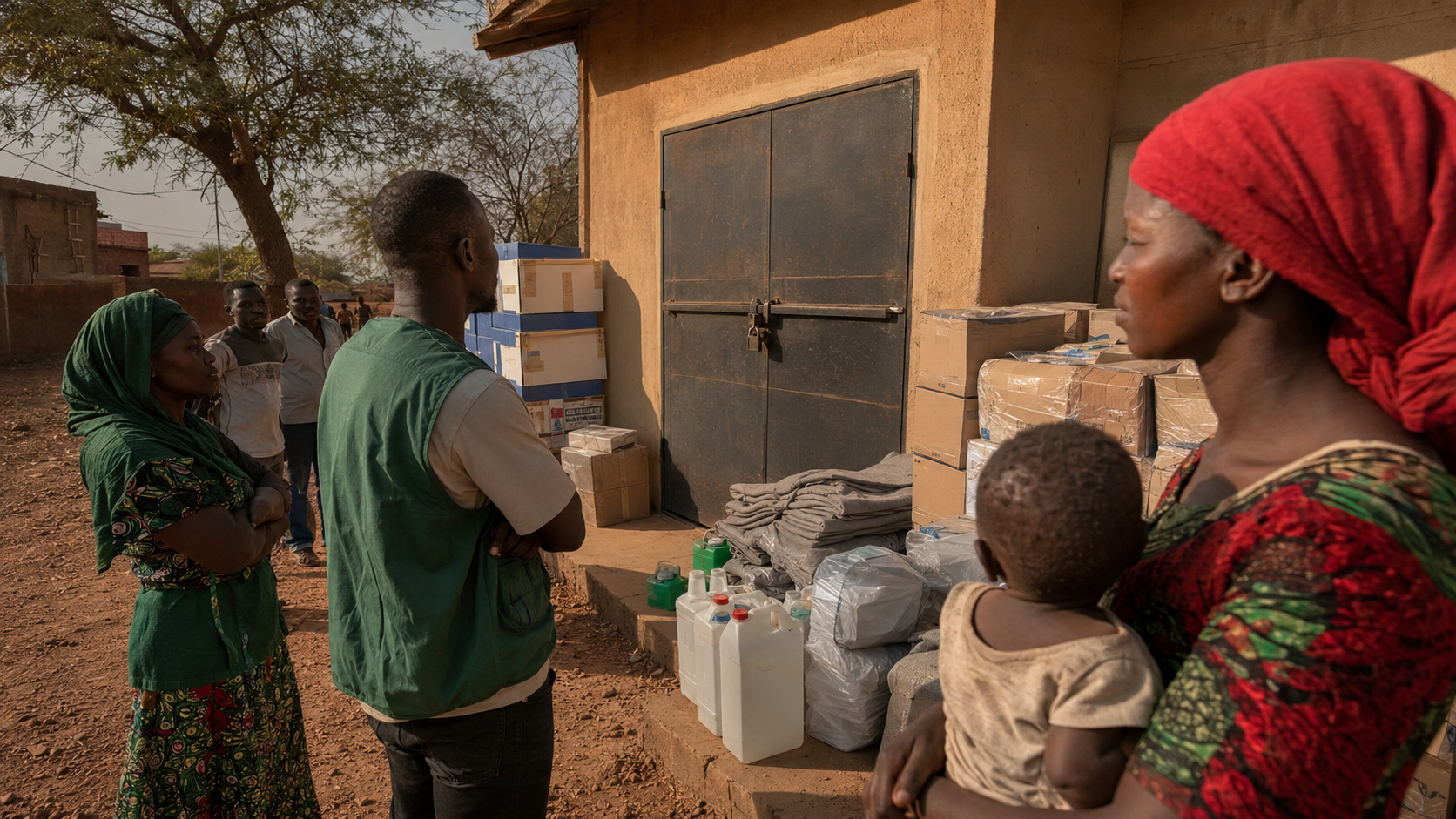
In a single administrative stroke, Burkina Faso wiped out 118 non governmental organisations and civil society groups, many of them dedicated to defending human rights. The Ministry of Territorial Administration and Mobility announced the dissolution and banned the groups’ activities, saying it acted “in accordance with current legal provisions.” For a country wrestling with one of the world’s fastest growing humanitarian crises, the organisations being erased are part of the machinery that keeps vulnerable people alive.
The move is the latest turn in a steady tightening under the military government of Ibrahim Traore, who took power in a 2022 coup. Last July, Traore signed a law restricting rights groups and unions. Within a month, the government revoked authorisation for 21 rights groups and handed three month suspensions to ten others, citing administrative reasons. Territorial Administration Minister Emile Zerbo invited the heads of the newly banned associations to conform to that July 2025 law, warning that “any offender faces the penalties provided for under current regulations.”
Amnesty International called the dissolution a “flagrant attack” on the right to freedom of association. Ousmane Diallo, the group’s senior researcher for the Sahel, said the decision was “at odds with the constitution of Burkina Faso” and incompatible with the country’s international human rights obligations. He framed it as part of a wider strategy to silence civil society through “abusive legislation, intimidation, harassment, arbitrary detention, and prosecution of human rights defenders,” and urged authorities to rescind it immediately.
The squeeze has been methodical. Last November, all national and international NGOs were ordered to close their commercial bank accounts and move them to a new state controlled bank, handing the government visibility over the sector’s finances. In January, all political parties were dissolved after three years of suspension. This month, Traore told citizens they must “forget about” democracy.
The government’s rationale sits inside a brutal security context. Burkina Faso is fighting a long war against armed groups linked to al Qaeda and ISIL, and NGOs with international funding are routinely accused of spying or colluding with them. That accusation is the lever. When aid groups can be branded security threats, dissolving them looks like national defence rather than repression, and the civilians who depend on their food, medical and protection work lose their lifeline with almost no recourse.